



















.png)
Summary. Malaysia’s Human Resources Development Fund (HRDF), officially rebranded as the Human Resources Development Corporation (HRD Corp), remains a cornerstone of national talent development in 2027. Under the PSMB Act 2001, employers with 10 or more Malaysian employees must contribute a levy (typically 1% of monthly payroll) to fund grants and incentives for workforce training. Eligible employers can claim support by registering with HRD Corp, selecting approved training programs, and submitting applications through the eTRiS portal, with reimbursement issued upon completion and documentation. Despite the rebranding, “HRDF” is still widely used, and participation continues to offer businesses financial relief, compliance with employment laws, and a pathway to upskilling employees in a competitive market.
Malaysia's economic growth and stability are closely tied to its human resources development. Central to this effort is the Human Resources Development Fund, or HRDF. It’s important to note that the HRDF officially rebranded in June 2021 to the Human Resources Development Corporation (HRD Corp), reflecting its expanded mandate beyond levy collection to include career coaching, placement services, and digital training platforms.
For many Malaysian employers, HRD Corp is more than just a statutory obligation. It represents a strategic opportunity to invest in employees’s skills, access financial incentives for training, and build resilience in an evolving job market.
Despite this rebranding, HRD Corp acknowledges that “the name HRDF remained in use amongst our stakeholders and members of the public,” as noted in its 2023 Annual Report. This is why you may still see the terms HRDF and HRD Corp used interchangeably in this guide and across official resources.
Whether you’re new to HRDF or need to optimize your claims, this guide explains what defines HRD Corp, how the fund operates in 2027, and what benefits Malaysian employers and employees can expect from participating.
What is HRD Corp (HRDF), and why does it matter?
Malaysia places great emphasis on human resource development. The HRDF is central to this commitment and acts as a pillar of the nation's talent development initiatives.
Definition and purpose of HRD Corp
The HRD Corp is Malaysia’s financial pool dedicated to supporting and empowering human resource development in the country. Managed under the Ministry of Human Resources, HRD Corp helps employers subsidize the costs of upskilling their workforce through grants, incentives, and approved training schemes.
In essence, the primary purpose of the HRDF is to provide financial assistance to employers for their employees' training and skill development to help address employee performance gaps.
Regulatory framework and how contributions work
The HRDF operates within a well-structured regulatory framework established under the Pembangunan Sumber Manusia Berhad (PSMP) Act 2001, which mandates that eligible Malaysian employers contribute to the fund through the monthly HRDF levy.
The HRDF levy is calculated as a percentage of your organization’s monthly payroll. These contributions represent a major chunk of funding for the HRDF to support Malaysia’s national goal of upskilling and reskilling the workforce.
Refer to the levy calculation guideline here.
Employers who are eligible are required to register and contribute, while exemptions apply to specific sectors such as:
- Government departments and agencies
- Local authorities
- Diplomatic missions
- Households employing domestic workers
Additionally, HRD Corp also manages the Government Special Fund, established to support targeted training programs and strategic initiatives. These funds are managed and disbursed to enhance the skills and capabilities of the Malaysian workforce, which contributes to the nation's socio-economic development.
What are the HRDF contribution rates for 2027?
Understanding contribution rates for the HRDF ensures that Malaysian employers are fulfilling their obligations and staying compliant.
Under sections 14 and 15 of the PSMP Act 2001, contribution requirements generally include:
- 1% of monthly payroll for employers with 10 or more Malaysian employees.
- 0.5% of monthly payroll for smaller employers in specific sectors.
- Contributions exclude allowances, overtime, and non-fixed payments.
Access the full levy calculation guidelines here.
To ensure you stay up to date with HRDF contribution rates, always monitor HRD Corp’s official website for the latest guidelines.
Benefits of HRDF Contributions
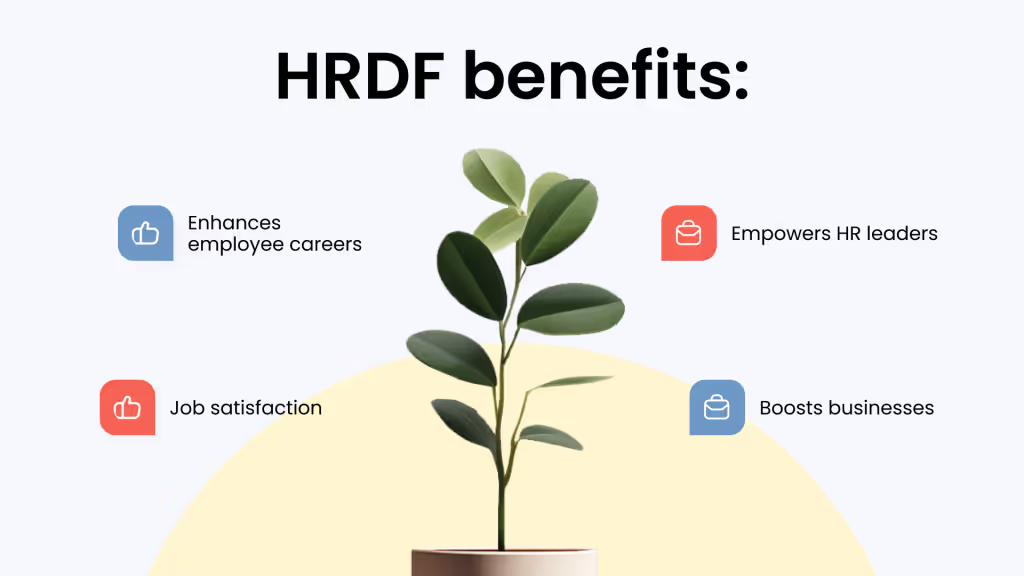
For Businesses
Supporting business growth and development
The HRDF empowers businesses by enhancing the skills and knowledge of their workforce. This contributes to business growth and development, as a well-trained workforce is more adept at tackling challenges and achieving organizational goals.
Financial incentives and grants for registered employers
Businesses registered with the HRDF can access financial incentives and grants to offset training and development costs. These incentives alleviate the financial burden associated with upskilling employees.
Compliance with the Employment Act 1955
Complying with HRDF requirements ensures that businesses fulfill their obligations under the Employment Act 1955, which mandates that employers provide opportunities for employee training and development.
Learn more: Understanding Malaysia’s Employment Act
For HR Leaders
Opportunities for Professional Development and Upskilling
HR professionals, particularly those responsible for talent development, benefit from the HRDF by gaining opportunities for their own professional development and upskilling in areas related to human resource management.
Enhancing HR Practices and Capabilities
Access to the HRDF helps HR leaders improve their department's practices and capabilities, aligning them with international standards. This, in turn, strengthens the organization's overall human resource management.
Promoting a Culture of Continuous Learning Within the Organization
HR leaders can leverage the HRDF to promote a culture of continuous learning within their organization. This encourages employees to continuously acquire new skills and knowledge, enhancing overall workforce productivity.
Read next: Shrinking Employee Performance Gaps Through Analysis and Continuous Learning
For Employees
Career Development and Enhanced Employability
Employees who participate in HRDF-sponsored training programs experience personal career growth and enhanced employability. As they acquire new skills and knowledge, they become more valuable assets to their employers and the job market as a whole.
Improved Work Satisfaction
With opportunities for learning and growth, employees often experience improved work satisfaction. This is because they feel valued by their employers and empowered to take control of their own career paths.
Enhanced Job Security
Learning and upskilling through the HRDF programs can enhance job security, as employees become adaptable and equipped to meet the evolving demands of the job market.
How HRDF Contributions Are Used
The funds collected through HRDF are channeled into a variety of training programs and initiatives aimed at upskilling and reskilling the Malaysian workforce. These programs cover a wide spectrum of skills, including technical, vocational, and soft skills, depending on the needs of the industry and the demands of the job market.
As we discussed above, employers and employees alike benefit from these programs, which can lead to improved job performance, career advancement, and overall competitiveness in the workforce. By investing in their employees through the HRDF, companies not only enhance their own capabilities but also contribute to the nation's economic development.
Employer Grant Schemes Offered Through HRDF
The Employer Grant Schemes play a pivotal role in empowering employers to nurture their employees' skills, enabling them to stay competitive in an ever-evolving job market. Employers can tap into several training schemes:
Incumbent Worker Training:
- Designed to enhance the skills of existing employees.
- Focuses on upskilling and reskilling to adapt to industry changes.
Skills Upgrading Programs:
- Targeted at improving employees' proficiency in specific skill sets.
- Aids in creating a workforce that's aligned with industry demands.
Apprenticeship Program:
- Supports the hiring and training of new talent.
- Provides financial assistance to companies engaging in apprenticeship programs.
Recognition of Prior Experiential Learning (RPEL):
- Allows employees to receive formal recognition for their prior work experience.
- Can result in certifications or qualifications, further enhancing employability.
Technology-Enhanced Learning:
- Encourages companies to adopt technology-driven learning solutions.
- Enhances the digital capabilities of employees.
English Language Training:
- Improves the English language proficiency of the workforce.
- Aids employees in better communication, especially in international business contexts.
Foreign Workers Training:
- Enhances the skills of foreign workers.
- Ensures their contributions to the workforce meet necessary standards.
Small-and-Medium Enterprise (SME) Training:
- Provides support for SMEs to train their workforce.
- Aims to boost the competitiveness of SMEs in the market.
Steps to Claim HRDF Grants and Training Incentives
Another important part of staying compliant with the HRDF is knowing how to prepare and submit your claim. Here’s a step-by-step overview of how to claim your grants effectively:
1. Register as an HRD Corp employer
- Complete the necessary employer registration process on the HRD Corp website.
- Ensure your company and levy details are up to date.
2. Select an approved training program or provider
- Choose courses from HRD Corp’s list of registered training providers.
- Confirm that the selected program is eligible under your chosen Employer Grant Scheme.
3. Submit your grant application via eTRiS portal
- Log in to the eTRiS portal.
- Fill out the grant application form and upload relevant supporting documents (training proposal, quotation, course details).
4. Receive approval confirmation
- Wait for HRD Corp to review and approve your application (usually within 10-14 working days).
5. Conduct training and maintain records
- Ensure that your employees attend and complete the training session.
- Keep attendance sheets and learning outcomes reports, if available.
6. Submit a reimbursement claim
- Upload employees’ proof of completion, invoices, and any additional required documents.
- Submit your reimbursement claim through the eTRiS portal.
7. Receive payment
- Once the claim is verified and approved, HRD Corp will process the payment to your company’s designated bank account.
Omni tip: It’s important to keep all your claim documents organized and accessible for auditing purposes. A centralized document management system like Omni makes it easy to store, track, and retrieve everything you need without the last-minute hassle.
Frequently Asked Questions
1. What is the purpose of HRDF?
The purpose of HRDF (now HRD Corp) is to encourage Malaysian employers to invest financially in the systematic training, upskilling, and reskilling of their workforce. It does this by collecting statutory levies from registered employers to build a fund that subsidizes or reimburses approved training programs, helping close skills gaps and keep the workforce competitive.
2. Who needs to pay HRDF?
Employers in Malaysia with 10 or more Malaysian employees are legally required to register and pay the HRDF levy, at 1% of monthly wages. Employers with 5 to 9 Malaysian employees can register voluntarily at a reduced rate of 0.5%.
3. What can I claim under HRDF?
Registered employers can claim financial assistance from their levy balance to cover employee training and development costs, including course and training fees paid to registered providers and trainer costs for in-house programs. Claims are processed through schemes like SBL-KHAS, subject to HRD Corp's Allowable Cost Matrix.
4. Is HRDF compulsory?
Yes. HRDF registration and monthly levy contribution are compulsory under the PSMB Act 2001 for businesses employing 10 or more Malaysian employees. Registration is optional for businesses with 5 to 9 Malaysian employees.
5. How do I claim HRDF training grants?
Employers must register with HRD Corp and apply for the grant via the eTRiS system before training, ensure employees attend approved training, and then submit a claim with supporting documents after training (within 6 months).
6. How are HRDF contributions calculated?
For employers with 10 or more employees, compulsory contributions are 1% of monthly wages. For employers with 5 to 9 employees, optional contributions are set at 0.5% of monthly wages instead.
7. What training programs are eligible for HRDF support?
Eligible programs are generally conducted by HRD Corp registered training providers. Refer to the full list of training programs here.
How Can Omni Help Malaysian Employees?
Investing in human resource development is a strategic move for business success. HRDF offers a dynamic range of support, encouraging lifelong learning and growth in the ever-competitive business landscape.
Omni makes it easier than ever to support Malaysian employees through the HRDF program.
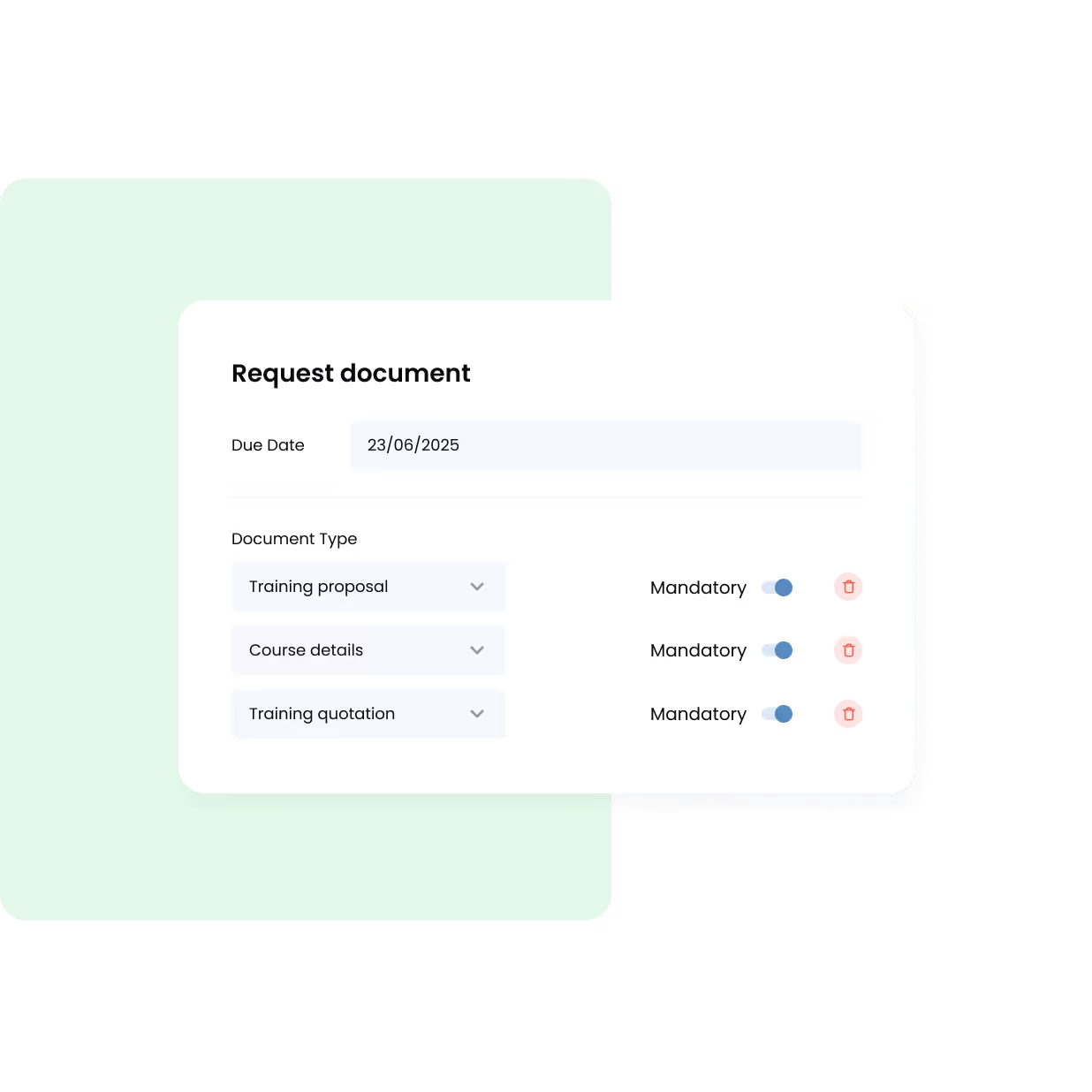
Our centralized document management solution makes gathering the necessary data required to apply for HRDF assistance seamless and timely. With customized workflows and automated reminders, HR can help empower employees to manage the deadlines and documentation requirements for HRDF applications. And centralized documents and real-time data make it easy for employees to access salary information and produce reports and documents necessary for verification.
Relevant reads: How to Apply, Claim, and Select Training Programs for HRDF Malaysia
Offering a comprehensive payroll solution tailored to Malaysia’s specific requirements with features like support for MYR, automated tax and EPF calculations, and managed HRDF allowances, Omni can help HR teams simplify their payroll processing and ensure compliance with ease.
Book a demo with our team to learn more about how Omni can support your Malaysian workforce.



.avif)
.avif)