



















.png)
Summary. The Philippine Labor Code 2024 and 2025 regulates employment practices, ensuring fair treatment and worker protection. It covers various employee types, including regular, project, and casual workers, and outlines key provisions like minimum wage, working hours, leave entitlements, and termination rules. Employers must stay updated on labor laws, implement clear policies, and use HR tech to ensure compliance and maintain a positive work environment.
The Philippine Labor Code regulates employment practices, ensuring fair treatment and worker protection. It covers various employee types, including regular, project, and casual workers, and outlines key provisions like minimum wage, working hours, leave entitlements, and termination rules. Employers must stay updated on labor laws, implement clear policies, and use HR tech to ensure compliance and maintain a positive work environment.
What is the Philippine Labor Code?
The Philippine Labor Code, formally Presidential Decree No. 442, is a comprehensive legal framework designed to regulate employment practices, labor relations, and company standards within the Philippines. Established to protect the rights and welfare of workers, the Code sets forth the legal standards for wages, working hours, benefits, and conditions of employment.
It serves as the cornerstone for labor relations, providing mechanisms for dispute resolution between employers and employees and ensuring fair labor practices. The Labor Code is dynamic, periodically updated through wage orders, DOLE advisories, and amending legislation to address the evolving needs of the workforce and the economy, making it essential for employers in medium-sized businesses across APAC to stay informed and compliant heading into 2027.
Who is covered under the Labor Code?
The Labor Code encompasses a wide range of individuals within the employment sphere, aiming to provide comprehensive protections and standards across various employment types. Specifically, it covers:
- Regular employees: Those who perform activities necessary to the usual business operations of the employer, signifying a long-term relationship.
- Project employees: Individuals with fixed employment for a specific project, of which the employer specifies the duration and scope at the engagement time.
- Seasonal employees: Workers employed for tasks or activities that are seasonal in nature, and their employment is limited to the duration of the season.
- Casual employees: Those engaged in work that is not part of the employer's regular business and is only occasional or temporary.
- Probationary employees: Employees on trial during a given period, allowing the employer to determine their suitability for regular employment based on standards made known to the employee at the time of engagement.
Additionally, the Labor Code provides specific provisions for domestic workers, known locally as "Kasambahay," covering their rights and welfare distinctly.
However, the Labor Code excludes certain groups from its coverage, including government employees governed by civil service regulations, international organizations with diplomatic immunities, and individuals in the informal sector under specific conditions.
This broad coverage ensures that the vast majority of workers in the Philippines are protected under labor laws, promoting fair treatment in the company and providing mechanisms for resolving employment disputes. Understanding this coverage as HR teams and business owners is essential in developing compliant policies and fostering a sound, supportive work environment.
2025–2026 Labor Law Amendments Employers Should Track Into 2027
Wage rates and compliance requirements under the Labor Code are updated regularly through DOLE wage orders and advisories. Here's what changed recently, and what to watch heading into 2027:
- Wage Order No. NCR-27: NCR's non-agriculture minimum wage rose from PHP 695 to PHP 755 per day, effective 25 July 2026, with a second tranche bringing it to PHP 780 from 20 January 2027. Agriculture sector rates rose from PHP 658 to PHP 718, rising again to PHP 743 in January 2027.
- Wage Order No. NCR-DW-06: the minimum wage for domestic workers (Kasambahay) in NCR increased from PHP 7,000 to PHP 7,800 per month, effective 7 February 2026.
- Regional wage orders: rates outside NCR are set independently by each Regional Tripartite Wages and Productivity Board and updated on their own schedules, so confirm your region's current order before computing payroll.
- Ongoing DOLE labor advisories: DOLE issues a labor advisory ahead of most regular and special non-working holidays specifying pay rules for that date. HR teams should check for a new advisory before each holiday rather than relying on the prior year's rate.
Given how frequently wage orders and advisories are issued, we recommend building a recurring compliance check into your HR calendar rather than a one-time annual review.
What are the types of employment?

The Labor Code defines various types of employment to accommodate the diverse nature of work arrangements and industry practices. Understanding these classifications is crucial for HR teams and business owners to ensure compliance with labor standards and foster a productive work environment. Here's a breakdown:
Regular employment. This type signifies a permanent employment status, where an employee performs tasks necessary to the business's operation. The Labor Code ensures that regular employees are entitled to full benefits and job security, including the right to unionize and receive employer-contributed social, health, and welfare benefits.
Project employment. Employers hire project employees for specific projects or undertakings with predetermined durations. The employment automatically ends at the project's conclusion. While project employees receive the same benefits as regular employees during their project's term, they lack tenure security after the project finishes.
Seasonal employment. Similar to project employment, employers hire seasonal employees for work that aligns with the seasonality of the operation, and the employment lasts only as long as the season does. One may consider these employees as regular employees, but this status lasts only during the season of their employment.
Casual employment. Casual employment involves hiring workers for tasks not typically essential to the employer's main business. Employers may consider a casual employee as a regular employee with respect to the performed activity if they work for at least one year, continuously or intermittently.
Fixed-period employment. Also known as term or contract employment, this arrangement involves an employee agreeing to provide services for a specific period. This type of employment remains valid only when based on the intrinsic quality of the work and not aimed at circumventing workers' tenure rights.
For modern, medium-sized businesses in APAC with a progressive mindset, recognizing these employment types and their respective rights, benefits, and limitations is key to managing a happier team. Proper classification avoids legal pitfalls and fosters a better company culture by ensuring employee engagement under fair and clear terms.
Hiring in the Philippines? Read our Global Hiring Guide for the Philippines.
What are the key provisions of the Labor Code?
The Labor Code of the Philippines provides a framework of rights and standards aimed at protecting workers while ensuring that employers can maintain a productive and efficient workforce. Here are some of the key provisions outlined in the labor code that HR teams and business owners should be aware of:
The Labor Code provides a framework of rights and standards aimed at protecting workers while ensuring that employers can maintain a productive and efficient workforce. Here are some of the key provisions that HR teams and business owners should be aware of:
Minimum wage
The Labor Code requires employers to pay a minimum wage for workers, which varies across regions to account for the differential cost of living. As of 25 July 2026, Metro Manila (NCR) has the highest daily rate at PHP 755 for non-agricultural work under Wage Order No. NCR-27, rising to PHP 780 from 20 January 2027.
Read next: Philippines Minimum Wage Guide for Employers
Working hours
Standard working hours are set at eight hours per day, for a total of 48 hours per week. Employers must compensate employees at a higher rate for hours worked beyond the standard, known as overtime pay.
Night shift differential
Employees who work between 10 PM and 6 AM are entitled to a night shift differential of at least 10% of their regular wage. This provision ensures fair compensation for workers contributing labor during less desirable hours.
Rest days
The Labor Code guarantees employees a minimum of one rest day after every six consecutive workdays. This provision enables them to rest, recover, and allocate time for personal activities or spending time with family, helping to prevent employee burnout.
Maternity and paternity leave
Female employees are entitled to 105 days of paid maternity leave under the Expanded Maternity Leave Law (Republic Act No. 11210), with an additional 15 days for solo parents and an optional 30-day extension without pay. Male employees are entitled to 7 days of paid paternity leave under the Paternity Leave Act (Republic Act No. 8187).
Mothers can allocate up to 7 days of their maternity leave to the child's father or an alternate caregiver, effectively providing fathers with up to 14 days of total parental leave when combined with their paternity leave entitlement.
Read next: Maternity and Paternity Leave Benefits Philippines
Parental leave
In addition to maternity and paternity leave, the law allows qualified solo parents to take parental leave, acknowledging the unique challenges single-parent families face.
13th-month pay
Employers must give their employees a 13th-month pay, equal to 1/12 of the total basic salary an employee earns within a calendar year, and pay it on or before December 24th each year. DOLE typically sets the 13th Month Pay Compliance Report deadline in mid-January of the following year, submitted through the DOLE Online Compliance Portal, so plan to file shortly after your 2026 disbursement closes.
Read next: 12 Employee Recognition Examples to Keep Your Team Engaged All Year
Special leaves for women
Female employees are entitled to special leaves for reasons related to their health and safety, such as cases of gynecological disorders, provided that they have rendered at least six months of continuous aggregate employment.
Service incentive leave
Employees who have rendered at least one year of service are entitled to a yearly service incentive leave (SIL) of five days with pay.
For businesses in the APAC region striving to cultivate a progressive company culture, adherence to these provisions is about valuing employee welfare and promoting a supportive and equitable work environment.
Navigating Employee Termination Under the Labor Code Philippines
Terminating an employee in the Philippines requires following proper procedures and understanding legitimate grounds for dismissal. The Labor Code provides clear guidelines that HR teams must follow to ensure compliance and avoid legal complications.
Legitimate Grounds for Termination
Termination based on serious diseases or health conditions
When an employee cannot perform their duties due to a serious illness, the employer has the right to terminate employment to maintain operational productivity and protect the wellbeing of other employees. The Labor Code requires a medical certificate to support the termination decision, stating that the disease remains incurable within six months despite proper medical treatment. The employee is entitled to separation pay in accordance with the Labor Code.
Relevant reads: 10 Impactful Exit Interview Questions to Improve Your Employee Experience
The Proper Termination Process Under Philippines Labor Code
Following the right steps ensures fair treatment and minimizes legal risk:
- Provide written notice detailing the specific reasons for potential termination with supporting evidence.
- Allow response time, giving the employee adequate opportunity (typically 5 days) to respond in writing.
- Conduct a fair hearing, creating space for the employee to present their perspective.
- Issue final decision, providing clear documentation if termination proceeds.
- Submit to authorities, filing the appropriate paperwork with the Department of Labor and Employment.
- Calculate separation pay, when applicable, ensuring proper financial settlements based on service duration.
Read next: Calculating and Administering Separation Pay in the Philippines
Navigating the termination process and notice periods with fairness, compassion, and legality is paramount for fostering a better company culture and growing productive teams.
We understand the complexities HR teams face when handling terminations. By following these guidelines, you can navigate these challenging situations while maintaining compliance and treating employees with respect.
Ways to Stay Compliant with the Labor Code

Staying compliant with the Labor Code is essential for businesses in the APAC region, to avoid legal repercussions and foster a positive company culture that values fairness and respect for employees' rights. Here are practical ways for HR teams and business owners to ensure compliance:
Stay updated on regulations
Labor laws and regulations can evolve, reflecting changes in the socio-economic landscape or in response to emerging trends. Regularly consult with labor law experts and participate in seminars and training sessions focused on labor law compliance, particularly around wage order updates, which can be issued multiple times a year.
Adopt clear and transparent policies
Developing and implementing company policies that align with the Labor Code is fundamental. These policies should cover all aspects of employment, from hiring to termination, and include detailed provisions for wages, benefits, working hours, leave entitlements, and grievance-handling procedures.
Leverage HR technology
Modern HR tools can significantly aid in maintaining Labor Code compliance. These systems can help in maintaining accurate employee records, which are crucial for audit purposes and in case of labor disputes. Investing in the right HR software not only streamlines administrative tasks but also minimizes the risk of non-compliance.
Read next: Best HRIS Systems in the Philippines
For businesses aiming to cultivate a progressive and inclusive company culture, adherence to the Labor Code is non-negotiable. By staying informed and compliant, adopting clear policies, and utilizing technology, HR teams and business owners can ensure compliance and build stronger foundations for happier, more productive teams heading into 2027.
Stay Compliant Under Philippines Labor Code with Omni
.avif)
Navigating the ever-evolving regulations when it comes to Philippines Labor Code can be challenging, and staying up to date with the latest mandates is crucial for HR teams to remain compliant. That’s why it’s important to have the right tools by your side.
Omni’s all-in-one HR software helps you stay up to date with the latest laws and regulations for the labor codes and regulations of the Philippines while streamlining the end-to-end employee management lifecycle.
Omni streamlines payroll processes, reducing manual errors and reducing the administrative burden on HR teams. With secure and centralized employee records, HR teams can easily store, update and share employee information across departments and with employees, ensuring compliance with the Labor Code of the Philippines at every step of the way.
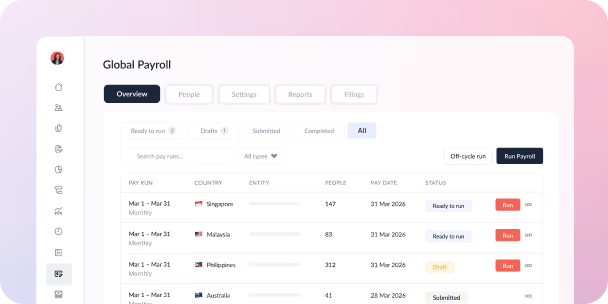
Our comprehensive payroll solution is tailored to the Philippines’ specific requirements. With features like support for the Philippine peso, localized language including Tagalog, automated SSS, Pag-IBIG and PhilHealth contribution calculations, and instant payroll reports, Omni can help HR teams simplify their payroll processing while ensuring compliance with local labor laws and regulations.
Book a demo with our team to learn more about how Omni can help simplify your payroll and compliance processes today.
Frequently Asked Questions
The Labor Code, formally Presidential Decree No. 442, is the primary law governing employment practices, labor relations, and worker protections in the Philippines. It sets standards for wages, working hours, benefits, and termination, and is regularly updated through wage orders, DOLE advisories, and amending legislation.
Regular, project, seasonal, casual, and probationary employees, along with domestic workers (Kasambahay), are covered. Government employees under civil service regulations, staff of international organizations with diplomatic immunity, and certain informal-sector workers are excluded.
Minimum wage varies by region. In NCR, the non-agriculture rate is PHP 755 per day as of 25 July 2026 under Wage Order No. NCR-27, rising to PHP 780 from 20 January 2027. Rates outside NCR are set independently by each region's Tripartite Wages and Productivity Board.
Termination must fall under either "just causes" (employee conduct issues like serious misconduct, gross neglect, or breach of trust) or "authorized causes" (business-related reasons like redundancy, financial losses, or closure). Employers must also follow due process, including written notice and an opportunity to respond, regardless of the ground cited.



.avif)
.avif)