


















.png)
For a long time, assessing intangible aspects like employee morale, job satisfaction, and happiness has been difficult, resulting in hit-or-miss solutions like pizza parties and yoga classes. But what if we could take a more systemic approach to developing an employee wellbeing program?
What is an employee wellbeing program?
Now, we’re not talking about the traditional Employee Assistance programs (EAPs), which see low utilization rates of 3 to 6%. In contrast, a modern employee wellbeing program adopts a holistic and proactive approach to employee health, encompassing not just health insurance and subsidized GP visits, but also robust mental health support. They provide access to self-care resources, including coaches, counselors, and psychotherapists, aiming to address issues before they escalate into serious concerns.
Why an employee wellbeing program is important

The value of employee wellbeing programs is underscored by their impressive return on investment. According to the World Health Organization, workplace mental wellbeing programs can yield up to $4 for every $1 invested. This demonstrates that these programs are not only beneficial for employees—improving their physical and mental health, work-life balance, and job satisfaction—but also for employers, leading to reduced absenteeism and presenteeism, increased efficiency, and enhanced employee engagement.
What are HR analytics?
HR analytics includes data collection and analysis to drive human resource decisions. Some examples of basic HR analytics include tracking attendance and turnover rates. However, advanced HR analytics go beyond administrative bookkeeping. They bring about deeper, insightful data insights aimed to enhance employee wellbeing programs.
How HR analytics inform employee wellness programs
With HR analytics, organizations can:
- Identity risk factors and intervene: By uncovering patterns in employee behavior, HR analytics enable proactive support and intervention.
- Make data-driven decisions: Analytics provide accurate insights into employee experiences, replacing guesswork with data-backed decisions to shape effective workplace wellness programs.
- Measure program effectiveness: Analytics track the impact of wellness programs, allowing HR to continually refine programs for better outcomes.
5 Steps for Building Data-Driven Workplace Wellness Programs

Creating an effective workplace wellness program requires more than just good intentions—it demands a strategic, data-driven approach. Here’s a five-step framework to guide you in building a program that leverages HR analytics for maximum impact.
1. Collect relevant HR analytics
As a start, you'll need to collect relevant HR analytics. Start small by focusing on a few key metrics that matter most to your organization mission and goals, and focus on actionable insights.
Examples of HR metrics to consider when developing your workplace wellness programs include:
- Leave data: Monitor absences due to illness or mental health issues to assess the cost of absenteeism and presenteeism.
- Performance data: Identify performance dips that could indicate employee burnout or productivity issues.
- Employee wellbeing: Evaluate job satisfaction, stress levels, and work-life balance.
- Benefits utilization: Assess how employees use wellness resources, like WFH days, and mental health support, to gauge engagement.
It’s also important to ensure employee data management is kept secure, anonymised, and used ethically throughout the entire process.
Read next: Employee Data Management: How HRIS Can Help Achieve Accuracy and Security
2. Identify risk factors, trends, and areas of need for your employees
Next up, identify risk factors, trends and areas of need for your employees. This makes it easier to craft an effective employee wellbeing program that caters to their needs, increasing utilization and adoption rates.
Identifying trends can highlight areas needing attention. For instance, persistent salary stagnation might signal the need for a pay equity analysis. If resignations are clustered in specific departments or follow leadership changes, conducting detailed exit interviews and implementing 360-degree appraisals could provide valuable insights. Additionally, if diversity, equity, and inclusion (DEI) issues are evident, it may be time for leadership to undergo unconscious bias training.
Learn more: 4 Common Performance Appraisal Biases (and Tips to Avoid Them)
Here are other red flags to consider:
Job and compensation history
- Frequent job changes (in less than 1 year)
- Lack of career progression
- Flat salaries with minimal bonuses
Headcount trend and attrition rate
- High turnover (over 20% annually)
- Sudden spikes in resignations
- Loss of key talents
- Flat or declining headcount
- Inconsistent hiring patterns
Diversity, equity, and inclusion
- Representation gaps
- Pay equity gaps
- Promotion rates disparities
3. Design targeted and evidence-based wellbeing program
Your findings from Step 1 and the gaps identified in Step 2 will shape your employee wellbeing program. Now’s the time to turn those insights into actionable strategies.
- Address burnout: If your leave and performance data indicate burnout, it might be time to reassess your work-life balance policies. Consider implementing flexible work arrangements or additional wellness days such as mental health days to alleviate stress.
- Build resilience: If stress levels rise during peak business periods, equip employees with strategies to manage their stress effectively. This could include offering workshops on emotional regulation or providing access to mindfulness resources.
- Destigmatize benefits use: If employees are reluctant to use their benefits due to fear of negative perceptions, focus on destigmatising these resources. Promote a culture where seeking support is encouraged and normalized, perhaps through awareness campaigns or leadership endorsements.
4. Launch and track key metrics to measure success
After implementing an employee wellbeing program, monitor both short-term and long-term metrics. In the short term, track utilization rates and changes on absenteeism and presenteeism. In the long term, assess its effects on broader workplace outcomes like employee turnover, morale, and engagement.
By comparing these metrics before and after implementation, you can effectively measure the program's success and even determine its ROI in dollars and cents.
5. Utilize ongoing HR analytics to refine program for optimal results
HR analytics will be your guiding light as you continue refining your program. For instance, if utilization rates are low for your global workforce, consider localizing your workplace wellness programs to suit cultural contexts and local vendor availability.
However, extremely high utilization or oversubscription may suggest an employee wellbeing crisis. In this case, consider training managers and leaders with skills needed to provide relevant support. For example, Mental Health First Aid™ (MHFA) training can equip them with the skills needed to support team members' mental health effectively.
Omni Tip: Consider mental health ambassadors within your organization to support, lead and implement your employee wellbeing programs!
Leverage Technology to Champion Employee Wellbeing
Modern problems require modern solutions, and HR analytics can be the answer to an effective employee wellbeing program.
Common challenges in implementing HR analytics, such as data availability, migration, and security, often hinder progress, but Omni eliminates these obstacles.
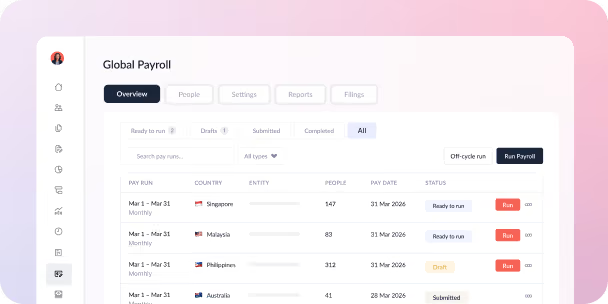
Acting as a single source of truth, Omni integrates data from various sources like payroll, time-off, and employee profiles, ensuring consistent and accurate HR analytics. Transitioning data from previous systems or spreadsheets can be time-consuming and error-prone, but our local support team assists with data input and workflow setup, ensuring a smooth transition. Additionally, protecting sensitive employee data is paramount; OmniHR is ISO 27001 certified and uses end-to-end encryption to guarantee maximum data protection.



.avif)
.avif)