



















.png)
Summary. Nearly 20% of Malaysian SMEs were hit with an average RM10,000 penalty due to PCB payroll errors in 2025 — a sobering reminder that getting payroll right in Malaysia is about more than just paying employees on time. A modern payroll system in Malaysia automates statutory contributions (EPF, SOCSO, EIS, PCB), generates compliant forms like EA and CP39, and ensures accurate LHDN e-Filing. This guide walks you through the key features to look for, how to evaluate pricing, what the implementation process looks like, and which platforms are worth considering for your team. Book a free demo to see how Omni can streamline your payroll today.
A payroll system is a software platform that automates the calculation, processing, and disbursement of employee salaries — including all statutory deductions, tax filings, and compliance reporting. In Malaysia, that means managing not just salary calculations, but also mandatory contributions to EPF, SOCSO, EIS, HRDF, and PCB on behalf of every employee, every month.
Getting payroll in Malaysia wrong carries real consequences. According to a 2025 report by YYC Advisors, nearly 20% of audited SMEs incurred penalties related to PCB (Potongan Cukai Bulanan) errors, with the average penalty reaching RM10,000 per case. PCB is Malaysia's mandatory monthly tax deduction system, where employers calculate and remit income tax on behalf of each employee directly to the Inland Revenue Board (LHDN). Even small, systematic miscalculations compound over time — and when LHDN comes knocking, the cost is rarely proportional to the error.
For businesses in Malaysia, managing payroll isn't just about paying employees. It means maintaining accuracy, efficiency, and compliance with local employment laws. Choosing the right payroll system Malaysia can help you reduce these risks by automating calculations, staying current with regulatory changes, and generating the documentation you need for statutory filings.
This guide covers what to look for in a payroll system, how to evaluate pricing, what good implementation looks like, and which platforms are worth your attention.
3 Best Payroll Software Malaysia: Top Options for 2027
Here's an honest look at the leading payroll platforms available to Malaysian businesses, with clear guidance on what each does well and who each is right for.
1. Omni HR
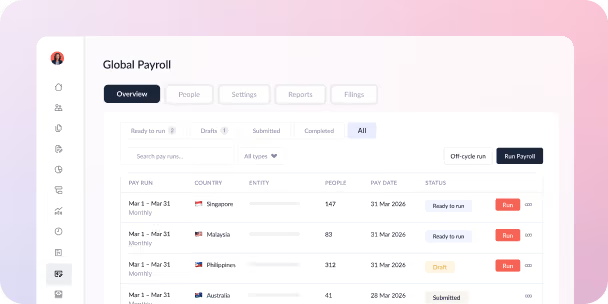
Omni is an all-in-one HR and payroll platform built for scaling companies across Asia. For Malaysian businesses, it combines deep statutory compliance with a complete HRIS — meaning payroll, leave, performance, attendance, recruitment, and employee records all live in one system rather than across disconnected tools.
Key features:
- Automated compliance for EPF, SOCSO, EIS, HRDF, and PCB with real-time regulatory updates
- Auto-generation of EA forms, Borang E, and CP39
- LHDN e-Filing support
- Multi-country payroll across 10+ countries in the region, including Malaysia, Singapore, the Philippines, Hong Kong, and Indonesia
- Employee self-service portal and mobile app for payslips, leave, and claims
- AI-powered workflows and agentic AI built in
- Real-time dashboards covering payroll costs, headcount, and statutory contributions
- Integrations with Xero, Slack, Google Calendar, and more
- Full HRIS: leave management, performance reviews, recruitment, attendance, and expense management
- Dedicated local support team operating in your timezone
Best for: Mid-sized companies in Malaysia that need reliable statutory compliance, want to replace fragmented HR tools with a single platform, and plan to expand regionally.
Pricing: Starts from S$3 per employee per month (pricing in SGD; MYR equivalent varies by exchange rate). Explore plans →
2. PayrollPanda
PayrollPanda is a cloud-based payroll platform purpose-built for the Malaysian market. It focuses specifically on payroll rather than offering a full HRIS suite, which makes it a strong option for teams that need a reliable, dedicated payroll solution without the overhead of a broader platform.
Key features:
- Automated payroll calculations with accurate EPF, SOCSO, EIS, and PCB deductions at current rates
- Payslip generation and bank file exports for direct salary disbursement
- Government form generation including CP39 and EA forms
- Leave management module
- Employee self-service for payslips and leave balances
- LHDN-approved software
Best for: SMEs and smaller businesses that need a straightforward, dedicated payroll tool with strong Malaysia-specific compliance coverage and don't yet need a full HRIS.
Pricing: Available on the PayrollPanda website (pricing in MYR; tiered based on employee count). Note that PayrollPanda does offer a free tier for small teams — worth checking if you're in the early stages.
3. Swingvy
Swingvy is a user-friendly HR and payroll platform with a strong focus on daily HR operations and employee experience. Its mobile-first design makes it a natural fit for teams where employees regularly submit claims, check leave balances, or request time off from their phones.
Key features:
- Automated salary calculations and payslip generation
- Statutory compliance for EPF, SOCSO, EIS, and PCB
- Mobile-enabled leave management and claims submission
- Expense management with multi-currency support and bulk processing
- Employee self-service via mobile app
- Time-tracking and attendance
Best for: Growing teams that prioritize a clean employee experience and mobile accessibility for day-to-day HR operations, and need solid payroll compliance without extensive customization.
Pricing: Swingvy pricing is structured in SGD (MYR equivalent varies by exchange rate). Visit the Swingvy website for current plan details, as pricing tiers and features are updated periodically.
Malaysia Payroll System Comparisons
What to Look for in a Payroll System in Malaysia
Forrester reports that 56% of payroll leaders cite reducing payroll errors and improving accuracy as a top priority. When evaluating a payroll system in Malaysia, here's where to focus your attention.
Automated compliance
Manually keeping up with Malaysia's evolving statutory requirements is time-consuming and error-prone. Contribution rates change. New regulations come into effect. Deadlines shift. An automated payroll system takes this burden off your team by keeping compliance on autopilot.
The right system should accurately calculate and deduct EPF, SOCSO, EIS, HRDF, and PCB contributions based on current rates — and update automatically when those rates change, without requiring manual intervention from your team. It should also reflect changes in employee status, such as salary adjustments or transitions from probation to permanent employment.
Look for platforms with built-in compliance checklists and localized templates for Malaysian statutory reporting — including readiness for LHDN e-Filing, which is a mandatory annual requirement.
Omni automatically recalculates EPF, SOCSO, EIS, and PCB contributions when regulatory rates change — so your team doesn't need to manually update rate tables after every LHDN circular. With proactive regulatory updates and structured audit trails, payroll stays accurate without relying on spreadsheets.
Accurate and timely payment
An effective payroll system in Malaysia calculates salaries accurately and ensures timely disbursement — with minimal manual effort. Automating salary runs helps you avoid late payments, meet regulatory deadlines, and significantly reduce the risk of errors that lead to employee dissatisfaction or compliance penalties.
This automation also frees up your HR team to focus on strategic priorities rather than administrative reconciliation. At its core, the system must ensure all calculations align with current tax laws and employment regulations to reduce the risk of fines, lawsuits, and penalties.
Omni's multi-country payroll capabilities support compliant payroll across Malaysia and 190+ countries — with dedicated payroll experts across the region and built-in calculators for country-specific requirements like PCB, ensuring accuracy at every step.
Localized support
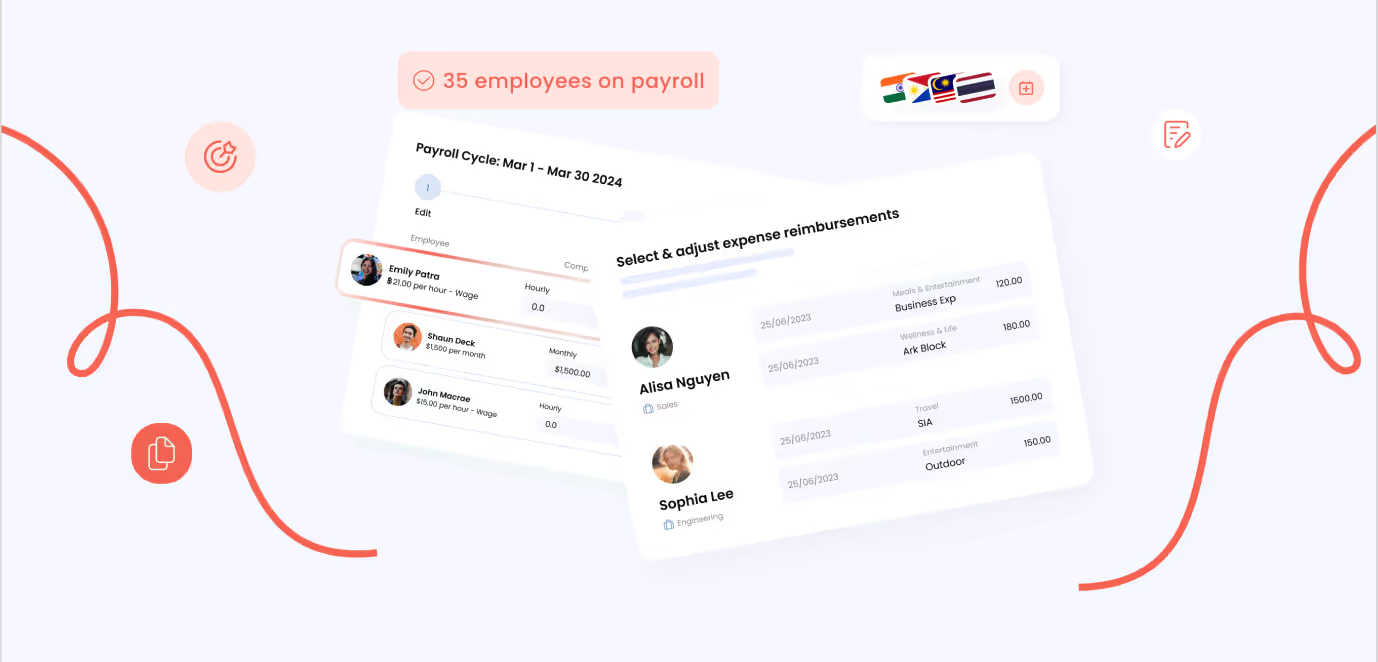
Beyond statutory contributions, a payroll system in Malaysia should generate government-compliant forms automatically — including the EA form, Borang E, and CP39. It should reflect national and state public holidays and local business practices to properly calculate work hours, leave entitlements, and overtime pay in line with the Employment Act 1955.
Seamless integration with Malaysian bank accounts is essential for timely salary payments. For teams with Malay-speaking employees, multilingual support in English and Bahasa Malaysia matters too.
Omni's support team operates in your timezone and understands the specific requirements of Malaysian payroll — from LHDN e-Filing nuances to HRDF levy calculations — so issues get resolved quickly rather than sitting in a global ticketing queue.
Robust data security
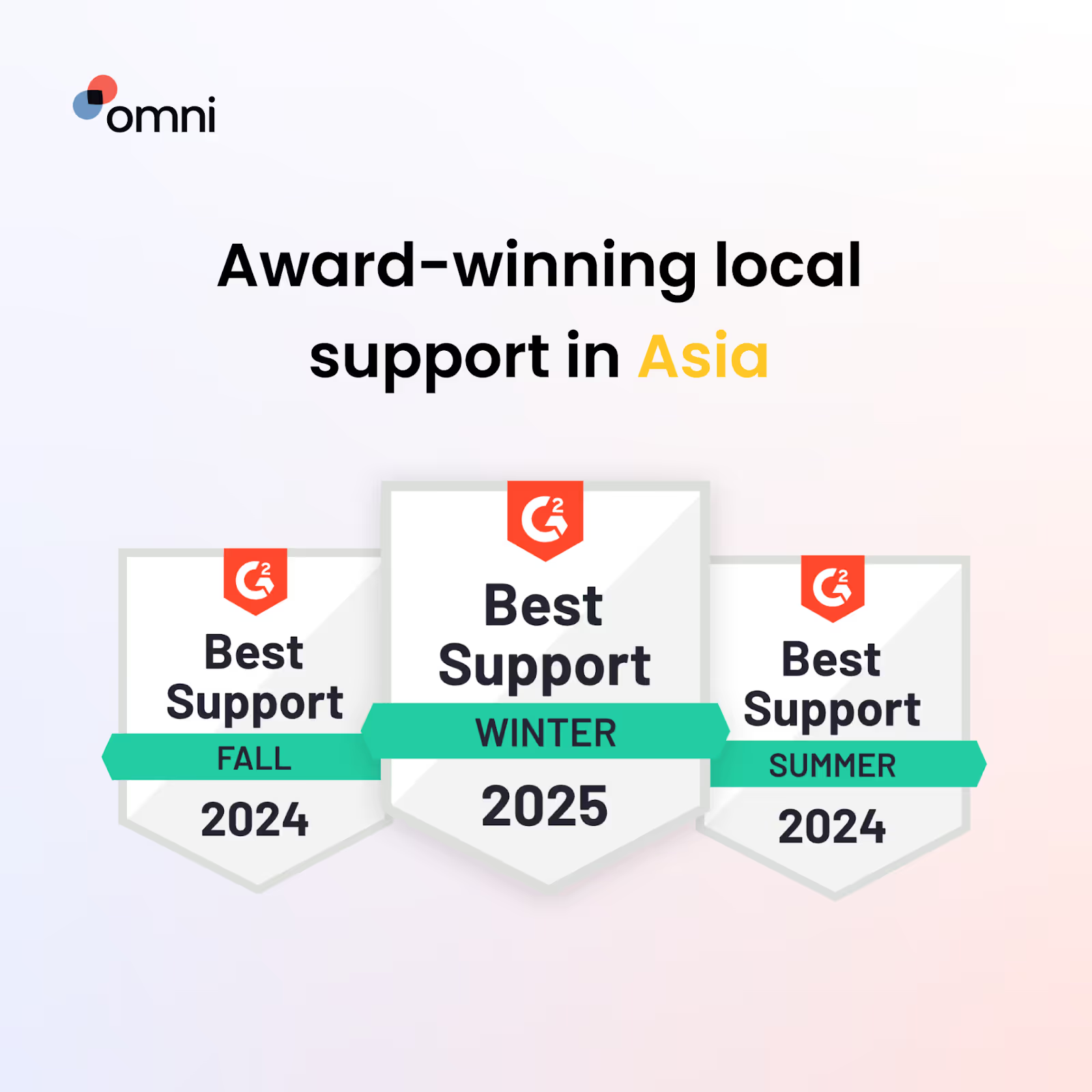
Your payroll system holds some of the most sensitive data in your business: employee salaries, bank account details, tax information, identification numbers, and contribution histories. The platform you choose should protect all of it in line with Malaysia's Personal Data Protection Act (PDPA).
Key security features to look for include end-to-end encryption for data in transit, secure cloud storage with ISO-certified infrastructure, and access controls such as role-based permissions and two-factor authentication.
Omni implements AES-256 encryption — the same standard used by banks — and hosts employee data in physically secure, ISO 27001-certified data centers with end-to-end encryption applied throughout.
Seamless integration
An effective payroll system in Malaysia connects with your existing HR, accounting, and finance tools — consolidating payroll data, employee records, and expense information in one centralized platform. This unified setup reduces the risk of data discrepancies across systems, eliminates manual re-entry, and makes payroll reconciliation straightforward.
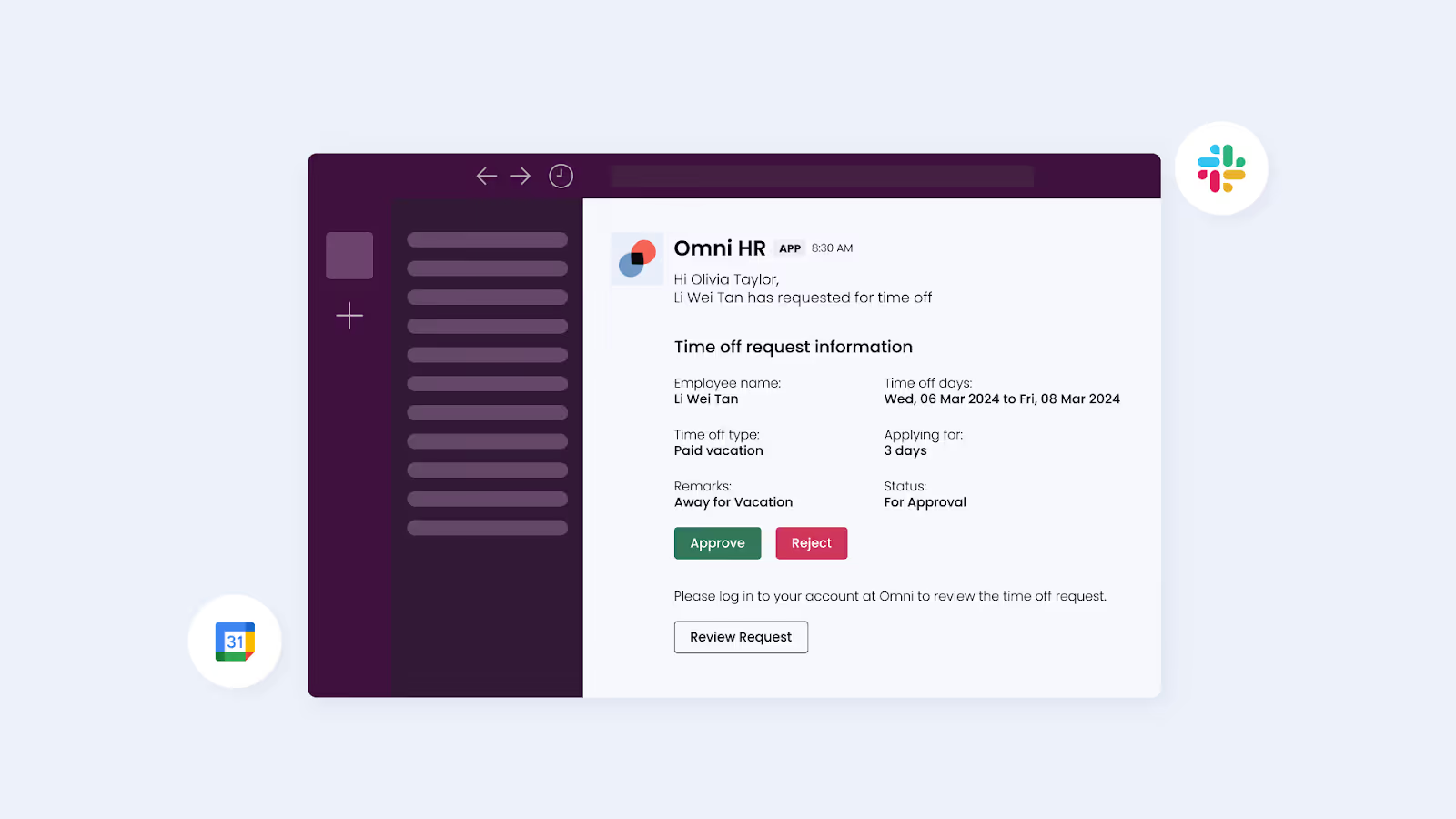
Beyond HR and finance tools, Omni integrates with everyday business platforms like Slack, Microsoft Teams, and Google Calendar — so your team can approve requests and stay on top of payroll activity without switching between applications.
Payroll Software Malaysia Pricing: What to Expect
Pricing is one of the most common questions when evaluating payroll software — and one of the most opaque. Here's a clear breakdown of how pricing structures work and what you should realistically expect to pay.
Pricing structures
Most cloud-based payroll systems in Malaysia use one of four models:
- Per employee/month: You pay a flat rate per active employee each month. This is the most common model for cloud-based systems and makes costs easy to forecast. Most reputable platforms — including Omni — price this way. Expect to pay roughly MYR 10– 50 per employee per month depending on the feature set.
- Tiered plans: Different tiers unlock different features — a basic tier covers payroll essentials, while higher tiers add modules like performance management, recruitment, or advanced analytics. Good for teams that want to start lean and add functionality as they grow.
- One-time license fee: A single upfront payment for perpetual software ownership, common with legacy on-premise systems. Lower recurring cost, but you'll typically pay separately for upgrades, support, and compliance updates — which can add up significantly as regulations change.
- Subscription-based (flat monthly/annual fee): A fixed fee regardless of headcount. Can be cost-effective for larger teams but may feel expensive for smaller ones early on.
Find the Omni pricing plan that fits your budget →
Watch for hidden costs
Quoted prices rarely tell the full story. Common hidden costs to probe for during your vendor evaluation include:
- Setup or onboarding fees — some platforms charge for initial configuration, data migration, or training
- Customization charges — fees for configuring workflows, forms, or reports to match your processes
- Support tier charges — responsive support (especially local support during Malaysia business hours) may only be included at higher pricing tiers
- Currency conversion fees — relevant if your payroll involves multi-currency disbursements or if the platform prices in a currency other than MYR
- Integration costs — third-party developer fees if the system doesn't natively connect to your accounting or HR tools
- Per-module pricing — some platforms charge separately for leave management, performance, and attendance on top of core payroll
The total cost of ownership is almost always higher than the headline per-employee price. Factor in setup time, ongoing support needs, and the cost of errors or compliance gaps when software doesn't update promptly after regulatory changes.
Return on investment
Choosing a payroll system in Malaysia is a strategic decision, and its value should be measured beyond the subscription cost. The right system saves time, reduces errors, improves the employee experience, and protects your business from costly compliance penalties.
To track whether the investment is paying off, monitor metrics like payroll processing time, error rates, compliance incident frequency, and HR administrative hours per pay cycle. These key performance indicators give you a clear picture of whether the system is working for your team.
HRIS ROI Calculator: Does Investing in HRIS Pay Off? →
Essential Features of Payroll Software in Malaysia
While features vary across platforms, here's what to expect from a strong payroll system in Malaysia.
Core features every platform should include
- Automated calculation of salaries, overtime, allowances, bonuses, and deductions
- Accurate statutory contributions for EPF, SOCSO, EIS, HRDF, and PCB at current rates
- Auto-generation of payslips and statutory forms including EA form, Borang E, and CP39
- Direct payroll disbursement to Malaysian bank accounts
- Time and attendance tracking to calculate work hours, leave, and overtime correctly
- Employee database management with secure document storage
- Interface and support in English and Bahasa Malaysia
- Employee self-service portal for payslips, leave balances, and personal information updates
- Responsive local support with knowledge of Malaysian compliance requirements
Advanced features for growing teams
- Multi-currency payroll support for teams operating beyond Malaysia
- Audit notifications for irregularities such as underpayment, overpayment, or contribution mismatches
- Comprehensive employee benefits administration
- Expense management integration to consolidate payroll and reimbursements
- Real-time analytics and reporting dashboards covering payroll costs, headcount trends, and pay equity
- Native integrations with accounting platforms like Xero and communication tools like Slack
- Scalability to support team growth without system disruptions or re-implementation
Signs your current payroll system needs an upgrade
The right time to evaluate a new payroll system is before you hit a breaking point. Watch for these signals:
- Your team is expanding beyond Malaysia into other countries
- Payroll errors or compliance issues are occurring more frequently
- Your payroll tool doesn't connect with your HR, accounting, or finance systems
- Employees regularly contact HR for payslips, leave balances, or tax form queries that should be self-service
- You need better reporting for budgeting, workforce planning, or payroll audits — and your current system can't deliver it
Key Features Every Modern HR Software Should Have →
Questions to Ask When Choosing Payroll Software in Malaysia
With so many platforms competing for your attention, the right questions cut through vendor claims quickly. Use this checklist when you're in evaluation mode:
- Does the provider automate EPF, SOCSO, EIS, HRDF, and PCB calculations at current rates — and update automatically when regulations change?
- Does it support LHDN e-Filing and generate EA forms, Borang E, and CP39 automatically?
- Is the platform genuinely user-friendly — not just for HR, but for the employees using the self-service portal?
- What does onboarding and data migration look like, and what support is included during implementation?
- Are pricing structures transparent, with a clear picture of what's included at each tier and what costs extra?
- What security certifications does the platform hold — ISO 27001, PDPA compliance, SOC 2?
- Does it connect natively with your accounting software, HR tools, and communication platforms?
- Does it support multi-country payroll if you plan to expand regionally in the next few years?
- Is local support available during Malaysia business hours, with people who understand Malaysian statutory requirements?
- Can the system scale alongside your team without requiring a platform switch at the next growth milestone?
Implementing Your Payroll Software in Malaysia
Selecting the right payroll system is only half the job — successful implementation determines whether your team actually realizes its benefits.
Set a clear implementation timeline. Map out each phase — configuration, customization, data migration, testing, and final rollout — with realistic deadlines. A typical implementation for a mid-sized Malaysian team takes four to six weeks when properly supported by your vendor.
Configure before you migrate. Customize fields, forms, user permissions, and approval workflows to match your internal payroll processes before bringing your historical data across. Migrating into an unconfigured system leads to rework.
Prepare your data carefully. Gather existing payroll records, salary data, statutory contribution histories, leave balances, and employee information well before the migration date. Clean data migrates cleanly.
Train your team in phases. Most payroll providers offer onboarding support including training sessions, how-to guides, and video tutorials. Train managers and finance users first, then roll out employee self-service access once the system is stable.
Run a parallel payroll cycle. Before going fully live, run one payroll cycle in parallel with your old system to verify that calculations, deductions, and disbursements match expectations. This catches configuration errors before they affect real pay runs.
Track adoption post-launch. Once live, monitor how your team is using the system, collect feedback, and continue optimizing. A payroll system that gets configured once and never revisited gradually drifts out of alignment with how your business actually works.
Free resource: Payroll System Implementation Checklist →
Choose a Payroll System Built for Malaysian Businesses

The right payroll system Malaysia does more than process salaries. It keeps you compliant with EPF, SOCSO, EIS, HRDF, and PCB obligations, generates your statutory forms automatically, and gives your HR and finance teams visibility into payroll data without manual reconciliation.
The 20% of Malaysian SMEs that faced PCB penalties in 2025 weren't making obvious mistakes — they were running processes that couldn't keep up with regulatory complexity. Moving to an automated system means your payroll keeps pace with the rules, even when the rules change.
Whether you need a dedicated payroll tool, a full HRIS, or a platform that scales across Southeast Asia, there's a solution that fits. Review payroll software options here, or book a demo with the Omni team to see how we handle Malaysian payroll compliance end-to-end.
Frequently Asked Questions
A payroll system in Malaysia is a software platform that automates the calculation and disbursement of employee salaries, including all mandatory statutory deductions and contributions. In Malaysia, this means accurately calculating and remitting EPF (Employees Provident Fund), SOCSO (Social Security Organisation), EIS (Employment Insurance System), HRDF (Human Resources Development Fund), and PCB (Potongan Cukai Bulanan — monthly tax deduction) for every employee, every pay cycle. A full payroll system also generates government-compliant forms like the EA form, Borang E, and CP39, and supports LHDN e-Filing.
Malaysian employers are legally required to contribute to four statutory schemes and manage one tax deduction obligation:EPF (Employees Provident Fund / KWSP): A retirement savings fund. Employer contribution rates are 12–13% of monthly wages depending on the employee's age and citizenship status.SOCSO (Social Security Organisation / PERKESO): Social insurance covering work-related injury, disability, and death. Employer contribution is approximately 1.75% of monthly wages.EIS (Employment Insurance System): Short-term financial assistance for retrenched employees. Both employer and employee each contribute 0.4% of monthly wages.HRDF (Human Resources Development Fund): A training and development levy, generally applicable to companies with 10 or more employees. Contribution is 1% of monthly wages for most sectors.PCB (Potongan Cukai Bulanan): Monthly income tax deduction calculated and remitted to LHDN on behalf of each employee. The deduction amount varies based on the employee's salary, tax residency, and applicable reliefs.
Expect to pay roughly MYR 10-50 per employee per month depending on the platform and feature set. Entry-level tools focused on payroll only tend to sit at the lower end; full HRIS platforms with payroll, leave, performance, and analytics sit higher. Some platforms also offer free tiers for very small teams. Always ask about setup fees, customization costs, and what support is included — headline prices rarely reflect the full cost of ownership.
All three are mandatory statutory schemes in Malaysia, but they serve different purposes. EPF is a long-term retirement savings fund — both employer and employee contribute a percentage of monthly wages, which the employee accesses upon retirement. SOCSO provides social insurance covering work-related injury, disability, or death — it's about protecting employees during their working years. EIS is a newer scheme providing short-term financial assistance to employees who have been retrenched — it helps them cover expenses while looking for new employment. All three are mandatory for most private sector employees, and employers are responsible for calculating, deducting, and remitting contributions to the respective bodies each month.
For most mid-sized Malaysian businesses, a well-supported payroll system implementation takes four to six weeks from kickoff to first live payroll run. That timeline covers initial configuration, data migration, user training, parallel testing, and rollout. Vendors that offer dedicated onboarding support, pre-built compliance templates for Malaysia, and smooth data migration tools can significantly reduce this timeline. The biggest variable is the quality and completeness of your existing payroll data — clean, well-organized records migrate faster and require less correction.
LHDN (Lembaga Hasil Dalam Negeri — the Inland Revenue Board of Malaysia) maintains an approved list of payroll software providers whose systems meet the specifications for generating PCB calculations and CP39 submissions in the required format. Using LHDN-approved software is strongly recommended for Malaysian employers, as it ensures that your monthly tax deductions and annual filings are accepted without formatting issues. Check the HASIL website for the current list of approved providers.



.avif)
.avif)