.png)
Summary. Navigating enterprise compliance in the Asia-Pacific (APAC) requires a comprehensive and nuanced approach due to the region's diverse and constantly evolving regulatory landscape. Key HR compliance areas include employment contracts, data privacy, labor laws, cross-border considerations, employee rights and benefits, and taxation and compensation. Enterprise HR teams must carefully manage varying requirements across jurisdictions, addressing challenges such as differing data protection laws, termination procedures, payroll obligations, and statutory benefits. Critical strategies for maintaining enterprise compliance management involve establishing clear corporate compliance management frameworks, implementing robust monitoring systems, conducting regular audits, and providing ongoing staff training to strengthen employee compliance. Organizations must leverage technology, maintain detailed documentation, and collaborate closely with legal teams to build stronger enterprise risk and compliance structures and effectively manage compliance in HR across all APAC markets.
For enterprise HR teams operating across APAC, compliance rarely means managing just one set of rules. Every country brings its own labor laws, tax systems, statutory benefits, and data protection regulations. What works for employment contracts in Singapore may need adjustments in Indonesia. Payroll reporting requirements in Australia won’t look the same in Vietnam or Thailand. This regulatory diversity makes enterprise compliance a daily operational challenge for HR teams managing regional workforces.
Big organizations tend to have shared service centres, cross-country reporting mechanisms, and multi-country payrolls. Routine HR processes from onboarding through payroll can put a company at risk of regulatory scrutiny without a structured enterprise compliance management program.
Failure to comply may damage reputation, disrupt operations, and strain employee relations across markets. This is why most enterprise HR departments are shifting towards stiffer corporate compliance management practices: establishing governance systems, consolidating control, and adopting technology to enforce compliance across regions.
Key Enterprise HR Compliance Areas
1. Employment contracts and HR policies
HR compliance begins with employment contracts. For organizations managing teams across multiple APAC markets, contracts must reflect local labor regulations while still aligning with the organization’s internal governance and enterprise risk and compliance protocols.
Most enterprise HR departments support enterprise compliance by creating regional templates that can be tailored to the legal requirements of each country, ensuring consistency across while keeping each contract within local law.
Contracts must also reflect how the workforce actually operates. Many enterprise organizations rely on:
- Hybrid teams
- Project-based roles
- Shift workers
- Remote workers
Each of these arrangements introduces distinct legal requirements that need to be clearly addressed in writing. HR leaders typically collaborate with legal and business leadership to ensure contracts also cover outsourcing provisions, client obligations, and reporting structures, all of which feed into effective corporate compliance management.
2. Data privacy
Employee data management is one of the fastest-growing areas of enterprise risk and compliance for HR teams.
Enterprise organizations process large amounts of employee data, such as:
- Payroll data
- Performance evaluations
- Identification data
- Compensation data
When operations span across multiple countries, controlling how that data is stored, access, and transferred becomes a core part of enterprise compliance management. Some countries have strict local data regulations, while others require alignment with international standards, such as GDPR, when employee data crosses borders.
Secure HR systems, restricted user access, audit trails, and defined retention policies all help protect sensitive information and strengthen employee compliance with data handling standards. Incident response procedures should also be in place so HR and compliance teams can act quickly in the event of a data breach.
3. Labor laws
Compliance in HR, particularly around labor law, remains one of the most complex areas of enterprise compliance across APAC, because every country has its own rules for hiring, probation, termination, and severance.
In Singapore, probation periods typically run three to six months, and termination notice can be as short as one week, depending on the contract. In contrast, countries like Indonesia or the Philippines often require stricter termination procedures and higher severance obligations. Enterprise HR teams must understand these differences before rolling out policies across markets.
Working hours rules also vary widely. In Australia, overtime is closely regulated under modern awards. In Japan, strict limits on excessive overtime exist under labor reform laws. HR teams must ensure payroll systems and employment policies reflect these local requirements as part of sound enterprise compliance management.
Workplace disputes require careful handling, too. Many companies create escalation processes aligned with local mediation systems, such as labor tribunals in Singapore or industrial relations processes in Malaysia, to reduce enterprise risk and compliance exposure.
4. Cross-border compliance
Enterprise organizations operating across APAC often manage employees and operations across several jurisdictions at the same time. This adds another layer of complexity to enterprise compliance.
One common issue is tax exposure. If employees based in one country regularly generate revenue or manage operations for another market, the company may unintentionally create a permanent establishment, triggering new corporate tax obligations. Monitoring these risks is a key part of enterprise compliance management.
Immigration compliance in HR is another practical challenge. Companies frequently relocate executives or specialists across the region. A Singapore-based company sending a manager to lead a team in Thailand, for example, must ensure the correct work permits and reporting requirements are met. Missing these steps can quickly escalate into a corporate compliance management issue.
Strong coordination between headquarters and local HR teams is essential to reduce regulatory risk and maintain clear enterprise risk and compliance visibility across the region.
5. Employee rights and benefits
Employee protections form a major part of HR compliance across APAC. Statutory benefits regulated by governments, including annual leave, public holidays, sick leave, parental leave, and other employee rights, vary significantly across regions, making benefits management a key component of enterprise compliance.
Enterprise HR teams must ensure that the benefits program meets local legal standardswhile remaining consistent with the company’s broader employee compliance policies. Many markets also have strict rules around overtime entitlement and shift allowances, making it critical to monitor working hours and compensation systems carefully.
Periodic reviews of benefits help companies keep policies aligned with changing legal requirements and support wider enterprise risk and compliance strategies by identifying potential compliance lapses before they escalate into legal matters.
6. Taxation, remuneration, and compensation compliance
Across APAC, employers must navigate varied tax systems, statutory contribution schemes, and reporting requirements as part of their broader enterprise compliance obligations. Organizations are responsible for withholding income taxes, submitting payroll reports to local authorities, and maintaining accurate records for regulatory audits. This is especially significant for large organizations where corporate compliance management spans multi-country payrolls.
Compensation structures must also comply with local laws. Bonuses, variable pay, and incentive schemes can be subject to different regulations depending on the jurisdiction. In some markets, specific allowances or overtime premiums must be reflected in payroll reporting to maintain HR compliance.
HR teams should also understand cross-border compensation frameworks to ensure employee compliance with both local standards and company-wide policies across all markets.
Tips on Monitoring and Reporting Enterprise HR Compliance
Establish a clear compliance framework
Begin by ensuring that compliance roles are clearly assigned at the HR, legal, finance, and regional leadership levels. Corporate compliance management is much more effective when everyone understands ownership of each component of the process.
Quite a number of enterprise organizations retain core policies at the center, while local HR departments handle country-specific requirements. This structure assists in ensuring that enterprise risk and compliance standards are met without disregarding local regulations.
Implement a robust monitoring system
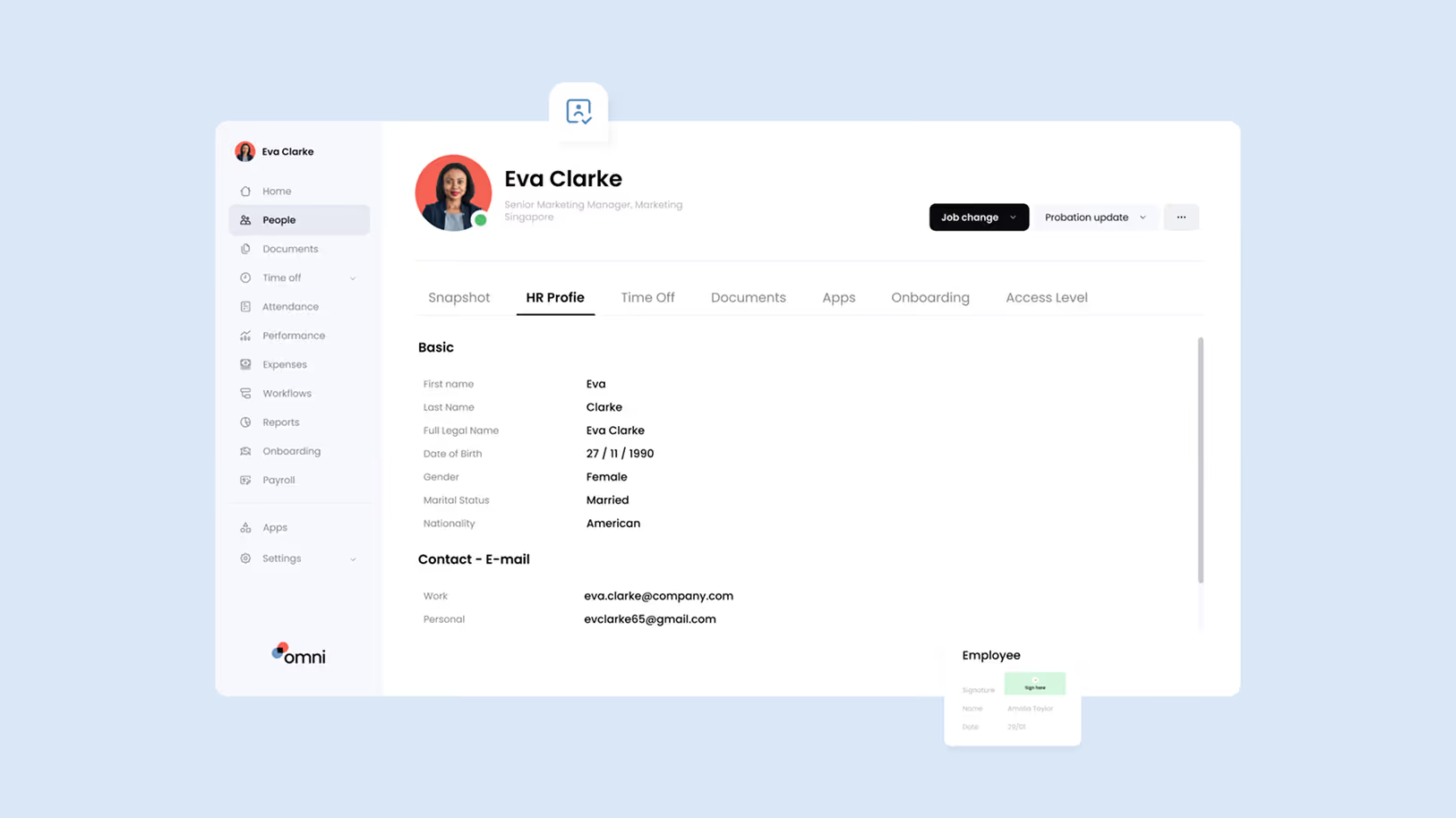
Monitor contracts, visa expirations, statutory deadlines, and payroll requirements using HR systems. Automation helps minimize errors and keep HR teams ahead of compliance risks.
The use of technology also enhances enterprise compliance by maintaining employee records and onboarding processes. This improves the HR compliance as well as the employee compliance between markets.
Conduct regular audits and assessments
Conduct regular audits of employment agreements, payroll, and statutory returns across all countries of operations
These reviews can detect minor gaps before they become bigger problems. Regular audits are one of the most reliable ways to ensure enterprise compliance remains strong and supports wider compliance efforts.
Maintain accurate and detailed reports
Maintain employee records in a centralized system. Contracts, payroll records, tax return and benefits should all be easily accessible during audits.
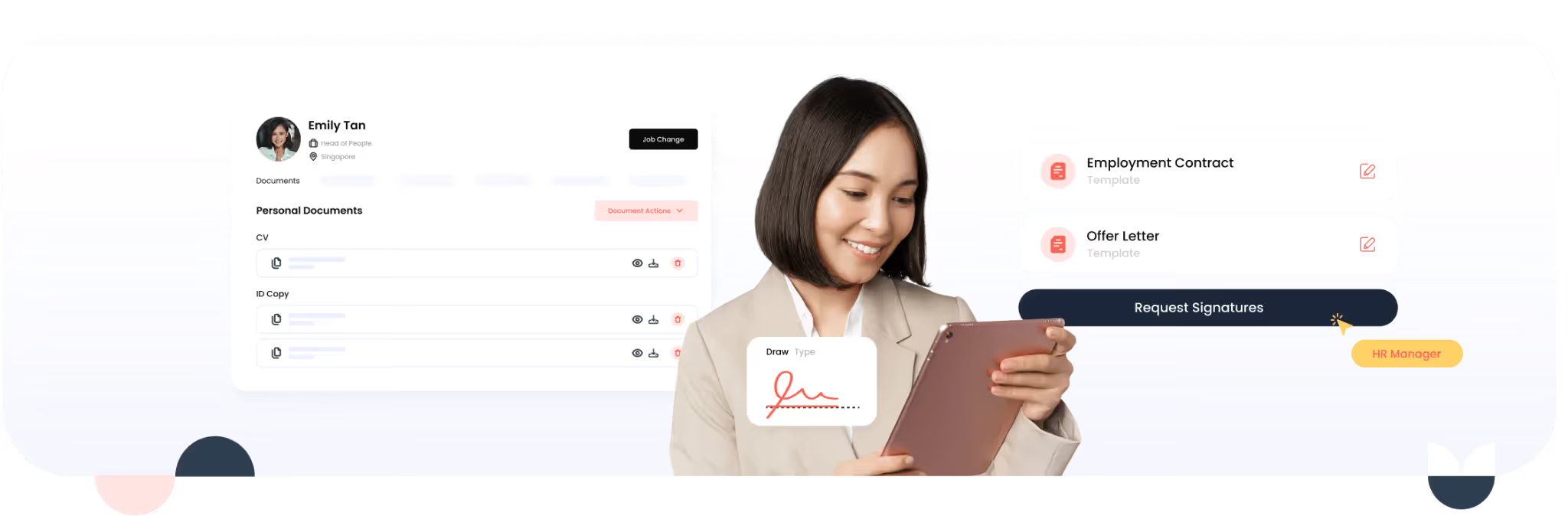
Clear documentation reinforces managing compliance in the corporation and assists HR managers in ensuring uniform enterprise compliance in more than one jurisdiction.
Develop effective reporting mechanisms
Make it easy for employees and managers to report compliance issues. Well-defined escalation channels enable HR teams to resolve problems swiftly.
Open reporting systems improve transparency and strengthen overall enterprise compliance management across the organization.
Provide ongoing training and education
Periodically train HR teams and managers on labor laws, payroll regulations, and workplace policies. When leaders understand expectations clearly, they are better positioned to ensure employee compliance and build stronger compliance in HR within their teams.
Stay informed and adapt
Keep track of regulatory updates across APAC. Labor laws, tax regulations and data protection regulations change frequently.
Monitoring these updates allows organizations to adjust policies proactively, ensuring strong enterprise compliance management even as the regulatory environment evolves.
Enterprise HR Compliance Best Practices
Strong enterprise compliance requires more than policies and monitoring tools. Here are a few best practices to build a more resilient compliance function:
Training HR staff on compliance matters
HR teams need to keep track of regulatory changes in the countries where the company operates. Ongoing training helps the HR staff stay aware of updates in labor laws, payroll regulations, and employee protection regulations.
This knowledge helps companies maintain high-level HR compliance and reduces the risk of costly compliance errors.
Encouraging a culture of compliance
Companies with a strong employee compliance rate typically build an organizational culture where compliance is seen as responsible business practice, not just an admin burden.
Effective communication, transparent processes, and leadership accountability further reinforce this culture. When employees and managers understand why compliance matters, policies are far more likely to be followed consistently.
Partnering with legal and compliance teams to reduce risk
Enterprise HR compliance teams rarely operate single-handedly.
Collaborating with legal counsel and regulatory experts helps keep employment agreements, payroll, and benefits schemes within the bounds of current law. These partnerships strengthen wider enterprise risk and compliance structures and help HR teams navigate a complex regulatory landscape.
Optimize HR processes
HR workflows should be reviewed on an ongoing basis to identify inefficiencies that could create compliance risks.
Automating payroll operations, centralizing employee records, and integrating compliance monitoring tools into HR systems can all significantly support corporate compliance management.
Leverage Omni for Enterprise HR Compliance
With all of the complexities of enterprise HR compliance, where regulatory requirements span multiple jurisdictions across APAC and are constantly evolving, Omni stands out as the comprehensive HRIS solution designed for the unique challenges faced by your organization. With bank-grade AES-256 encryption, ISO 27001-certified data centers, and end-to-end encryption, we provide the robust security infrastructure essential for protecting your sensitive employee data.
Why modern enterprise HR teams choose Omni
Omni's automated workflows and centralized document management system help your enterprise HR team maintain compliance across multiple regulatory frameworks, from Singapore's Employment Act to Australia's Fair Work Act. Through features like automated compliance reporting, customizable access controls, and consent management capabilities, Omni transforms complex enterprise compliance requirements into manageable, streamlined processes.
For enterprise organizations looking to scale while maintaining regulatory compliance, Omni offers more than just an HRIS platform — we provide a strategic partnership that supports your growth while safeguarding your organization against compliance risks. As testified by our enterprise customers across the region, Omni's customizable platform adapts to your unique organizational needs while ensuring consistent HR compliance standards across all markets.

.png)


.png)