.avif)


Summary. As Southeast Asia’s gig economy expands, Malaysia’s gig workers act introduces a structured framework to protect gig workers while preserving the flexibility of platform-based work. The law clarifies gig workers meaning by recognising them as a distinct workforce category, separate from traditional employees, while setting expectations around contracts, payment transparency, dispute resolution, and fair deactivation practices. Alongside developments in the gig workers bill, including the evolving gig workers bill 2025 and gig workers bill 2025 malaysia framework, HR teams must adapt by formalising agreements, reviewing classification risks, and strengthening documentation and compliance processes. By taking a proactive approach, organisations can continue leveraging gig talent effectively while aligning with new regulatory standards.
Flexible talent is increasingly important for companies across Southeast Asia. Delivery riders, freelance tech talent, designers, and digital contractors are becoming increasingly important to how business is conducted, and Malaysia is no exception.
Over the past ten years, platform-based work has accelerated in the country across logistics, e-commerce, ride-hailing, and digital services. Gig workers are speedy, flexible, and economical to many businesses.
However, regulatory concerns have also been brought up by the expansion of the gig economy. Issues related to employee safety, equitable wages, and conflict resolution have become increasingly difficult for governments to avoid. To address this, Malaysia enacted the Gig Workers Act to protect gig workers while maintaining the flexibility of platform work.
For HR leaders, the Act adds a compliance dimension to manage. It does not eliminate the use of gig talent; however, it requires businesses to be more mindful in how they interact with, categorise, and manage workers.
This guide provides an overview of the Gig Workers Act and its implications for HR teams, along with guidance on how to prepare, especially as discussions around the Gig Workers Bill continue.
What is the Gig Workers Act?
The Gig Workers Act is a Malaysian law designed to ensure that consumers in the digital economy who use gig workers have minimum protections and operate in accordance with established standards.
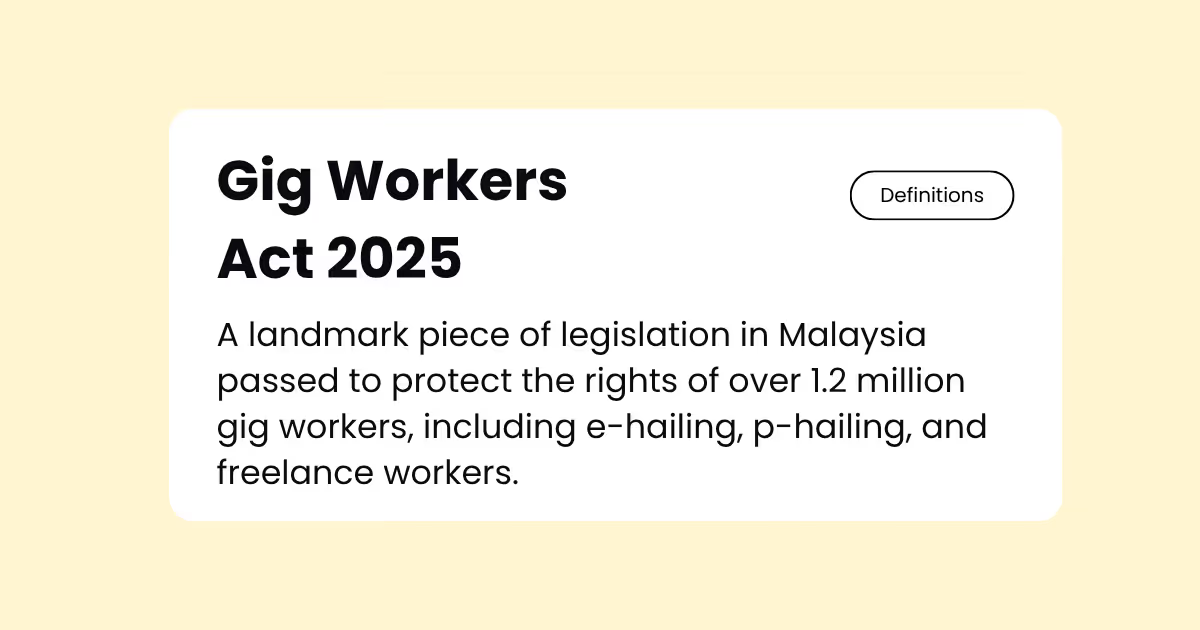
The program was launched as part of a broader government effort to institutionalize protections for the gig economy without compromising the independent nature of gig work. The proposed legislation aims to establish a well-formatted regulatory framework of platform-based employment and does not transform gig workers into standard employees.
In practice, the Act aims at achieving the following three main objectives:
- Create minimum safeguards for gig workers.
- Introduce governance principles for platform operators.
- Offer institutional dispute resolution means.
Notably, the Act does not necessarily regard gig workers as employees.
Rather, it views gig work as a new employment model that no longer fits within traditional employment paradigms. Understanding the gig workers meaning in this context is important, as it’s not about eliminating platform work but about providing guardrails to mitigate exploitation and enhance transparency.
The law generally applies to:
Gig workers
People who make money by offering their services via digital platforms or task-based systems, which include delivery riders, drivers, freelancers, and platform-based service providers.
Platform operators
Firms that assist in providing gig work through online platforms, applications, or formalized marketplaces.
The Gig Workers Act will create a more stable environment for both workers and companies in the Malaysian gig economy by establishing minimum standards for engagement and dispute resolution.
For HR teams, the Act does not eliminate gig work; it simply provides greater clarity on how to manage gig workers.
Key Provisions HR Must Understand for the Gig Workers Act
Although the final implementation rules have not yet been finalized, several provisions are likely to shape how businesses collaborate with gig workers.
Your HR team should pay close attention to the following areas:
1. Formalized service agreements
The Act underscores the need for transparent written contracts between platform operators and gig workers.
Such agreements are likely to define the main terms, including:
- Scope of services
- Payment structure
- Rules and obligations of platforms.
- Conditions of termination or suspension
The Act's definition of "gig workers" focuses on individuals providing services through platforms without formal employment, which means informal arrangements will no longer work for companies that use gig talent.
Terms of engagement should be written down to prevent conflicts. In practice, business organizations may require standardization of contractor agreements on a platform and freelance contracting.
2. Transparency and earnings clarity
The lack of transparency in earnings calculations has also been a major criticism of gig platforms worldwide.
The Gig Workers Act deals with this by motivating greater disclosure regarding:
- Pay structures
- Commission deductions
- Incentive models
- Platform fees
This makes gig workers aware of how their income is calculated and helps eliminate disputes over remuneration. If your company is hiring in Malaysia, your earnings models must be simpler to justify.
3. Deactivation and dispute protections
Gig workers worldwide are highly concerned with platform deactivation. In most cases, employees are denied a platform due to a lack of a clear explanation.
The new framework presents the fair deactivation practice expectations, which can involve:
- Clear reasons for suspension or removal
- Notification requirements
- Opportunities for workers to respond or appeal
This requires the HR and compliance teams to document procedures for terminating gig workers on a platform or system.
4. Dispute resolution framework
Another key component of the Gig Workers Act is the establishment of formal dispute-resolution channels. This is expected to give gig workers access to structured processes for resolving issues related to:
- Payment disputes
- Platform suspensions
- Contract disagreements
Instead of relying solely on internal platform processes, conflicts can be intensified through regulatory or mediation procedures.
For the company, this underscores the importance of effective documentation of gig contracts and operational decisions.
Importance of Classifying Employee vs Gig Worker
A common misinterpretation of the Gig Workers Act is that it eliminates classification risk. The Act establishes specific rights for gig workers without conflicting with existing legislation, particularly the Employment Act 1955 in Malaysia.
Even when a gig arrangement begins to resemble an employment relationship, companies may still misclassify it. Regulators and courts typically evaluate factors such as the extent of a company's control over its workers.
HR departments must be wary of gig arrangements that entail such aspects as:
- Fixed working hours: If workers are required to work strict hours, regulators may consider the arrangement employment.
- Performance supervision: the regular monitoring of performance, a structured performance review, or a mandatory workflow that defines the boundary between the contractor and the employee.
- Exclusivity clauses: If gig workers cannot work on other platforms or for other clients, the arrangement may appear less independent.
- Equipment provision: Sometimes, the provision of tools, uniforms, or vehicles implies employer control.
The Gig Workers Act does not nullify these considerations. Rather, it provides an additional layer of security for gig workers, although employment classification laws still apply. For HR leaders, the safest option is to conduct periodic reviews of the gig workforce structure to ensure compliance.
What This Means for Your HR Strategy
For most firms, the Gig Workers Act's greatest impact will be functional, not legal. HR departments will need to develop more formalized systems for engaging and managing gig workers.
Here are some practical considerations for HR leaders.
- Audit gig workforce models: Determine the locations where gig workers are used across the business, the functions they perform, and their engagement methods. This helps HR identify potential compliance or classification risks at the outset.
- Reassess contractor engagement frameworks: Examine current contractor arrangements, payment terms, and engagement policies to develop a clear overview of responsibilities, expectations, and termination provisions.
- Review vendor/platform compliance: If gig workers are recruited through third-party platforms, ensure those platforms comply with regulations on contract terms, payment transparency, and dispute resolution.
- Ensure proper documentation and dispute protocols: maintain clear documentation of the agreement, payment terms, and rules of engagement, and provide a simple mechanism for workers to resolve disputes or complaints.
- Align payroll and reporting processes where applicable: Ensure payments to gig workers are organized and recorded to enable HR and finance to manage records, payments, and future reporting needs.
Implementation Timeline & What to Monitor
The government has indicated a keen interest in formalizing protections for gig workers, particularly as the proposed gig workers bill 2025 continues to develop into the broader gig workers bill 2025 Malaysia regulatory framework.
These are areas that you can track:
- Effective enforcement timeline: The Gig Workers Act will be implemented at the end of March 2026 in parallel with regulatory instructions of the Ministry of Human Resources and other agencies.
- Regulatory oversight: Government agencies responsible for labour regulation and the digital economy are expected to be involved in enforcement.
- Future social protections: Policymakers have already discussed potential extensions to support social security contributions, insurance coverage requirements, and broader dispute resolution protections.
Government announcements and official regulatory updates should keep the HR teams informed. The most effective organizations will make compliance a continuous process rather than a single-time adaptation.
Streamline Gig Workforce Compliance with Omni HR
Managing gig workers becomes more complex when contracts, payments, and engagement terms are stored in emails, spreadsheets, and across multiple platforms.
With the introduction of regulations such as the Gig Workers Act in Malaysia, which set expectations for documentation and dispute management, HR teams must adopt a more formal approach to tracking the broader Gig Workers Bill 2025 framework.
Omni HR allows firms to manage their contractors and gig workers in one place. HR departments can archive service agreements, maintain records of contractor transactions, and maintain clear records of payment terms and working arrangements.
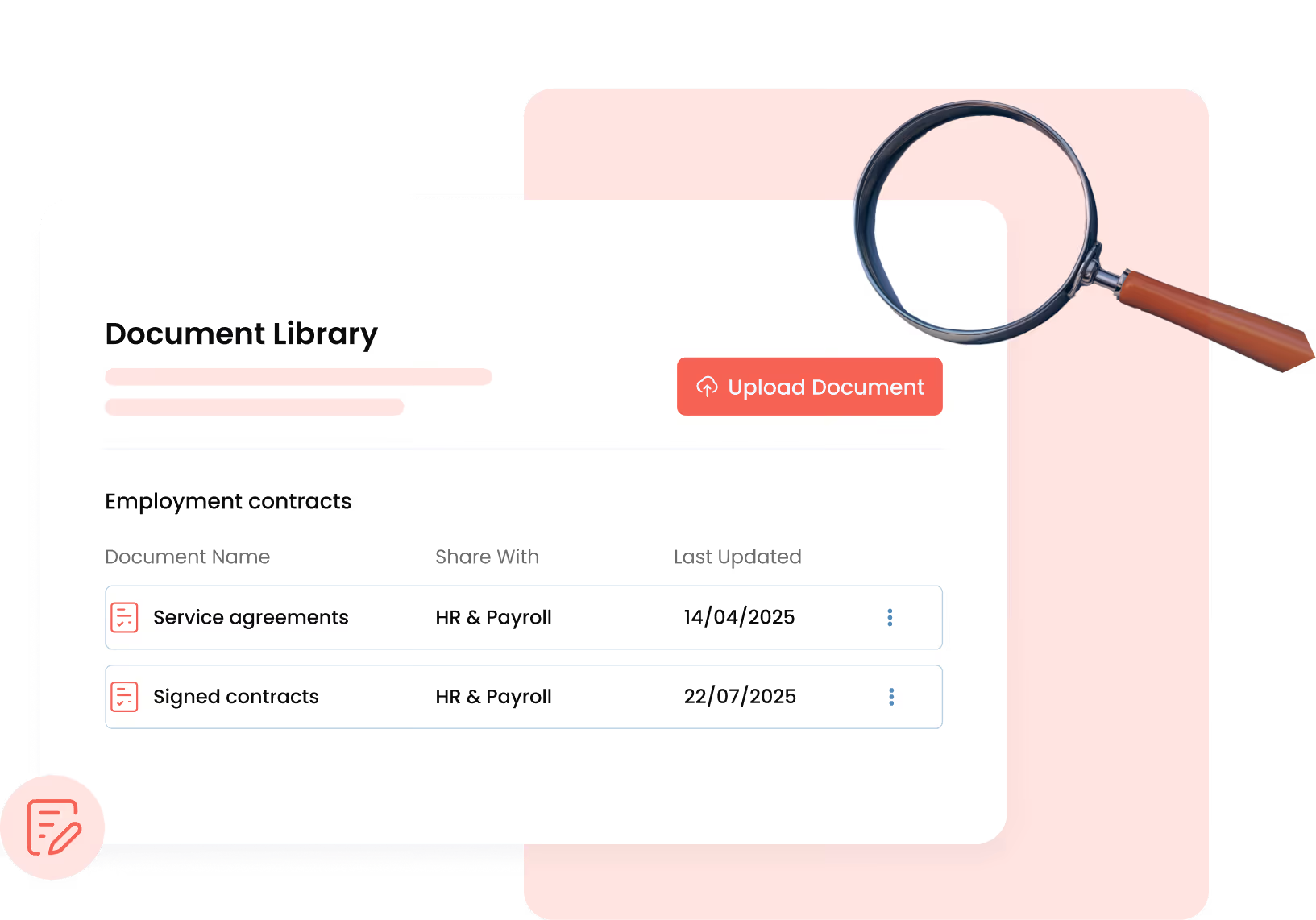
This makes it easier to manage gig worker relationships and keep records organized for compliance and, if needed, dispute resolution. Our unified document management system helps HR teams maintain control of gig workforce operations while reducing administrative workload.
Flexible talent is increasingly important for companies across Southeast Asia. Delivery riders, freelance tech talent, designers, and digital contractors are becoming increasingly important to how business is conducted, and Malaysia is no exception.
Over the past ten years, platform-based work has accelerated in the country across logistics, e-commerce, ride-hailing, and digital services. Gig workers are speedy, flexible, and economical to many businesses.
However, regulatory concerns have also been brought up by the expansion of the gig economy. Issues related to employee safety, equitable wages, and conflict resolution have become increasingly difficult for governments to avoid. To address this, Malaysia enacted the Gig Workers Act to protect gig workers while maintaining the flexibility of platform work.
For HR leaders, the Act adds a compliance dimension to manage. It does not eliminate the use of gig talent; however, it requires businesses to be more mindful in how they interact with, categorise, and manage workers.
This guide provides an overview of the Gig Workers Act and its implications for HR teams, along with guidance on how to prepare, especially as discussions around the Gig Workers Bill continue.
What is the Gig Workers Act?
The Gig Workers Act is a Malaysian law designed to ensure that consumers in the digital economy who use gig workers have minimum protections and operate in accordance with established standards.
The program was launched as part of a broader government effort to institutionalize protections for the gig economy without compromising the independent nature of gig work. The proposed legislation aims to establish a well-formatted regulatory framework of platform-based employment and does not transform gig workers into standard employees.
In practice, the Act aims at achieving the following three main objectives:
- Create minimum safeguards for gig workers.
- Introduce governance principles for platform operators.
- Offer institutional dispute resolution means.
Notably, the Act does not necessarily regard gig workers as employees.
Rather, it views gig work as a new employment model that no longer fits within traditional employment paradigms. Understanding the gig workers meaning in this context is important, as it’s not about eliminating platform work but about providing guardrails to mitigate exploitation and enhance transparency.
The law generally applies to:
Gig workers
People who make money by offering their services via digital platforms or task-based systems, which include delivery riders, drivers, freelancers, and platform-based service providers.
Platform operators
Firms that assist in providing gig work through online platforms, applications, or formalized marketplaces.
The Gig Workers Act will create a more stable environment for both workers and companies in the Malaysian gig economy by establishing minimum standards for engagement and dispute resolution.
For HR teams, the Act does not eliminate gig work; it simply provides greater clarity on how to manage gig workers.
Key Provisions HR Must Understand for the Gig Workers Act
Although the final implementation rules have not yet been finalized, several provisions are likely to shape how businesses collaborate with gig workers.
Your HR team should pay close attention to the following areas:
1. Formalized service agreements
The Act underscores the need for transparent written contracts between platform operators and gig workers.
Such agreements are likely to define the main terms, including:
- Scope of services
- Payment structure
- Rules and obligations of platforms.
- Conditions of termination or suspension
The Act's definition of "gig workers" focuses on individuals providing services through platforms without formal employment, which means informal arrangements will no longer work for companies that use gig talent.
Terms of engagement should be written down to prevent conflicts. In practice, business organizations may require standardization of contractor agreements on a platform and freelance contracting.
2. Transparency and earnings clarity
The lack of transparency in earnings calculations has also been a major criticism of gig platforms worldwide.
The Gig Workers Act deals with this by motivating greater disclosure regarding:
- Pay structures
- Commission deductions
- Incentive models
- Platform fees
This makes gig workers aware of how their income is calculated and helps eliminate disputes over remuneration. If your company is hiring in Malaysia, your earnings models must be simpler to justify.
3. Deactivation and dispute protections
Gig workers worldwide are highly concerned with platform deactivation. In most cases, employees are denied a platform due to a lack of a clear explanation.
The new framework presents the fair deactivation practice expectations, which can involve:
- Clear reasons for suspension or removal
- Notification requirements
- Opportunities for workers to respond or appeal
This requires the HR and compliance teams to document procedures for terminating gig workers on a platform or system.
4. Dispute resolution framework
Another key component of the Gig Workers Act is the establishment of formal dispute-resolution channels. This is expected to give gig workers access to structured processes for resolving issues related to:
- Payment disputes
- Platform suspensions
- Contract disagreements
Instead of relying solely on internal platform processes, conflicts can be intensified through regulatory or mediation procedures.
For the company, this underscores the importance of effective documentation of gig contracts and operational decisions.
Importance of Classifying Employee vs Gig Worker
A common misinterpretation of the Gig Workers Act is that it eliminates classification risk. The Act establishes specific rights for gig workers without conflicting with existing legislation, particularly the Employment Act 1955 in Malaysia.
Even when a gig arrangement begins to resemble an employment relationship, companies may still misclassify it. Regulators and courts typically evaluate factors such as the extent of a company's control over its workers.
HR departments must be wary of gig arrangements that entail such aspects as:
- Fixed working hours: If workers are required to work strict hours, regulators may consider the arrangement employment.
- Performance supervision: the regular monitoring of performance, a structured performance review, or a mandatory workflow that defines the boundary between the contractor and the employee.
- Exclusivity clauses: If gig workers cannot work on other platforms or for other clients, the arrangement may appear less independent.
- Equipment provision: Sometimes, the provision of tools, uniforms, or vehicles implies employer control.
The Gig Workers Act does not nullify these considerations. Rather, it provides an additional layer of security for gig workers, although employment classification laws still apply. For HR leaders, the safest option is to conduct periodic reviews of the gig workforce structure to ensure compliance.
What This Means for Your HR Strategy
For most firms, the Gig Workers Act's greatest impact will be functional, not legal. HR departments will need to develop more formalized systems for engaging and managing gig workers.
Here are some practical considerations for HR leaders.
- Audit gig workforce models: Determine the locations where gig workers are used across the business, the functions they perform, and their engagement methods. This helps HR identify potential compliance or classification risks at the outset.
- Reassess contractor engagement frameworks: Examine current contractor arrangements, payment terms, and engagement policies to develop a clear overview of responsibilities, expectations, and termination provisions.
- Review vendor/platform compliance: If gig workers are recruited through third-party platforms, ensure those platforms comply with regulations on contract terms, payment transparency, and dispute resolution.
- Ensure proper documentation and dispute protocols: maintain clear documentation of the agreement, payment terms, and rules of engagement, and provide a simple mechanism for workers to resolve disputes or complaints.
- Align payroll and reporting processes where applicable: Ensure payments to gig workers are organized and recorded to enable HR and finance to manage records, payments, and future reporting needs.
Implementation Timeline & What to Monitor
The government has indicated a keen interest in formalizing protections for gig workers, particularly as the proposed gig workers bill 2025 continues to develop into the broader gig workers bill 2025 Malaysia regulatory framework.
These are areas that you can track:
- Effective enforcement timeline: The Gig Workers Act will be implemented at the end of March 2026 in parallel with regulatory instructions of the Ministry of Human Resources and other agencies.
- Regulatory oversight: Government agencies responsible for labour regulation and the digital economy are expected to be involved in enforcement.
- Future social protections: Policymakers have already discussed potential extensions to support social security contributions, insurance coverage requirements, and broader dispute resolution protections.
Government announcements and official regulatory updates should keep the HR teams informed. The most effective organizations will make compliance a continuous process rather than a single-time adaptation.
Streamline Gig Workforce Compliance with Omni HR
Managing gig workers becomes more complex when contracts, payments, and engagement terms are stored in emails, spreadsheets, and across multiple platforms.
With the introduction of regulations such as the Gig Workers Act in Malaysia, which set expectations for documentation and dispute management, HR teams must adopt a more formal approach to tracking the broader Gig Workers Bill 2025 framework.
Omni HR allows firms to manage their contractors and gig workers in one place. HR departments can archive service agreements, maintain records of contractor transactions, and maintain clear records of payment terms and working arrangements.
This makes it easier to manage gig worker relationships and keep records organized for compliance and, if needed, dispute resolution. Our unified document management system helps HR teams maintain control of gig workforce operations while reducing administrative workload.
Full HR & Payroll coverage for Philippines, Singapore, Malaysia, Hong Kong, and Indonesia. Each market has local support teams and built-in compliance features.
Starting at $3/employee/month for core features. Volume-based discounts are available for growing teams. Book a demo for custom pricing.
Enterprise-grade security with ISO 27001, GDPR certifications, and local data residency options.
4 weeks average. Includes free data migration, setup, and team training. No hidden fees.
Built specifically for Asia with local payroll processing, same-day support in Asia time zones, and 40% lower cost than global alternatives.

.avif)